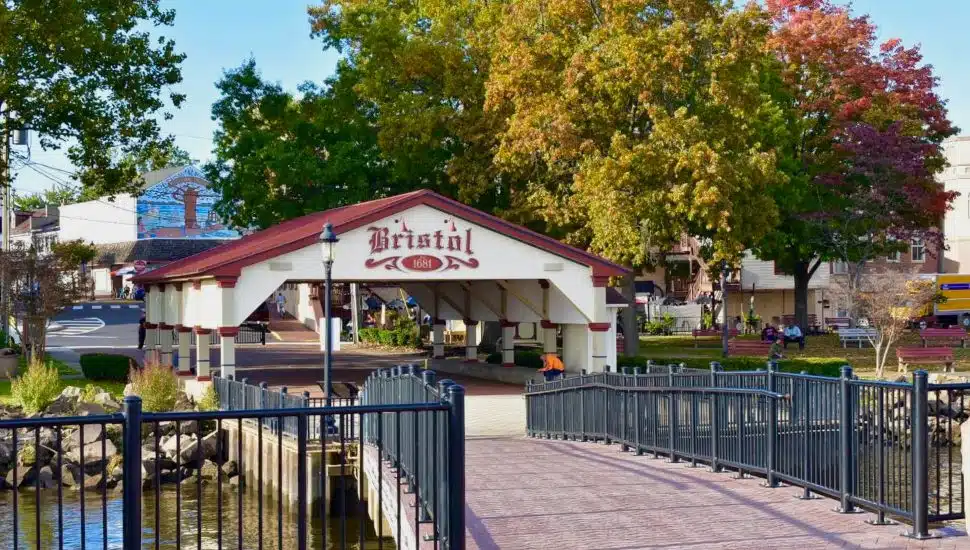
Walk down Mill Street on a Saturday afternoon and it’s hard to believe Bristol Borough was nearly written off.
Live music spills out of open doorways. Diners linger at sidewalk tables. A line forms outside a coffee roaster. Shoppers stroll along the scenic waterfront.
Founded in 1681, the borough has repeatedly reinvented itself, staying very much alive.
Like scores of industrial river towns along the Northeast corridor, Bristol spent decades absorbing gut punches: factories shuttered, jobs vanished, storefronts darkened.
At one point, more than half of Mill Street sat vacant.
But the decline wasn’t permanent. Through years of investment in its waterfront, historic storefronts, housing, and the independent businesses that give the borough its personality, Bristol has pulled off a revival that feels less like a makeover and more like a rediscovery.
The River Comes Back to Life
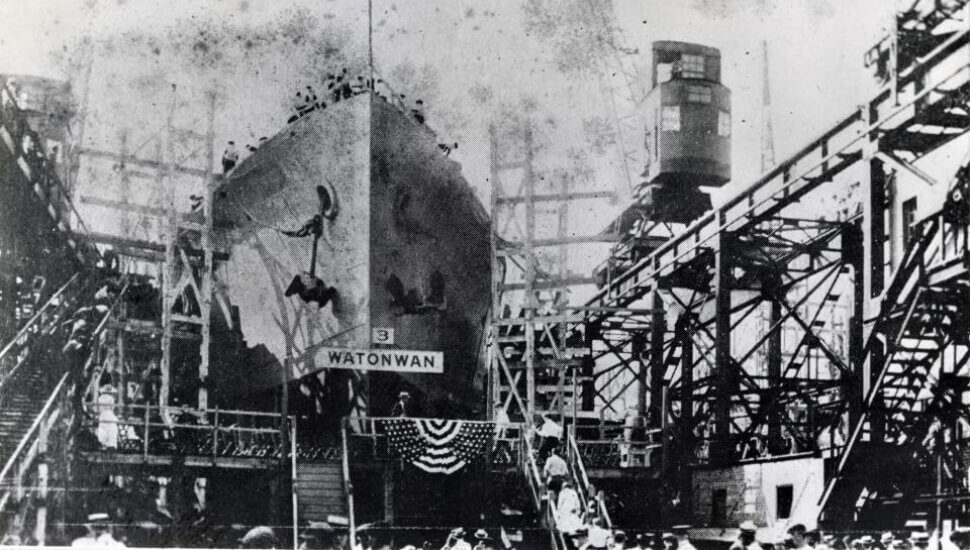
For most of the 20th century, Bristol’s relationship with the Delaware River was industrial.
Former factories and warehouses consumed the waterfront, blocking the view and the access for residents.
That image has changed dramatically. Industrial sites have been cleaned up and redeveloped into public spaces, new housing, and recreational amenities.
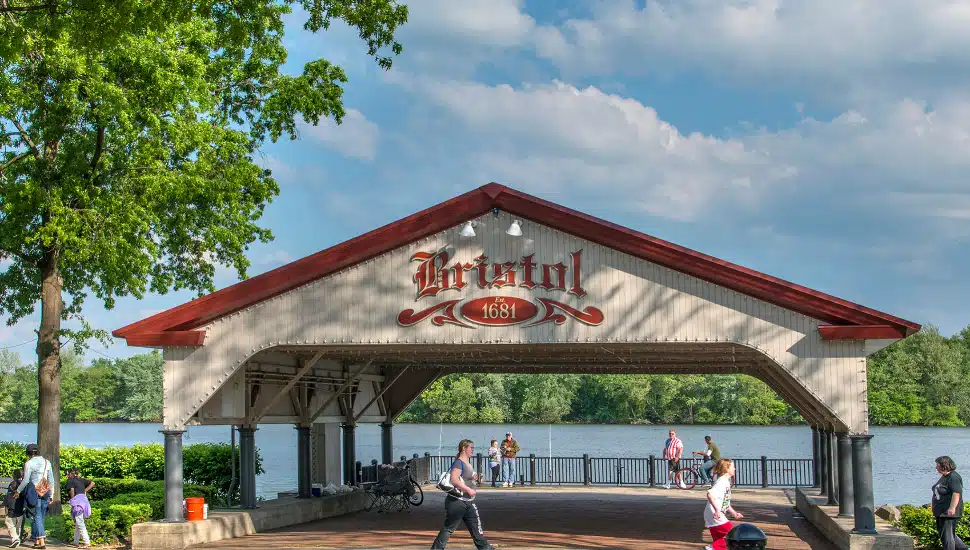
The completion of Bristol Wharf and its public docks reconnected residents and visitors with the river for the first time in generations.
Waterfront parks, walking paths, and event venues have transformed what was once an industrial edge into the borough’s social backbone.
Continued investment, including plans to expand the public boat docks, have cemented Bristol’s identity as a riverfront destination, rather than just a town that happens to sit on a river.
Mill Street’s Second Act
The turnaround on Mill Street didn’t happen by accident, and it didn’t happen overnight.
Borough officials, local organizations, and business owners spent years restoring historic facades, improving streetscapes, and recruiting independent businesses to give the downtown its soul.
The work got a major boost in 2017, when Bristol won Deluxe Corporation’s Small Business Revolution competition, a national contest that brought $500,000 in funding, marketing expertise, and infrastructure improvements to the borough.
Today, the corridor that was once more than half vacant is lined with restaurants, cafés, breweries, boutiques, bookstores, and specialty retailers.
Standout spots drawing regulars and out-of-towners include: Drift on Mill, Mill Street Cantina, and Calm Waters Coffee Roasters for dining and drinks; Bristol Books & Bindery, The Shops on Mill, Collectors Corner Bristol, and a cluster of antique dealers for browsing.
And then there’s the King George II Inn, a landmark that predates the United States itself.
Established in 1681 as a ferry house on the banks of the Delaware, the inn is widely considered the oldest continuously operating inn in America, a colonial institution still pulling pints more than 340 years later.
It anchors Bristol’s past as firmly as any new business defines its future.
A Housing Market With Character
Bristol Borough’s residential revival has followed a similar philosophy: fix what’s there first, build carefully on what’s left over.
Rather than razing its historic neighborhoods, the borough has focused on restoring its existing housing stock while introducing new development on former industrial properties.
The result is an appealing mix: renovated rowhomes, restored Victorian houses, modern townhomes, and new waterfront condominiums, all within walking distance of downtown and a quick ride from Philadelphia on SEPTA’s regional rail.
That combination of historic character, walkability, and river access has made Bristol one of Bucks County’s most distinctive and in-demand housing markets.
A Calendar That Keeps People Coming Back
The borough’s events calendar is dense by design.
Signature events like Historic Bristol Day, weekly Sunday Strolls, Oldies on the River, and the multi-day Italian Festival anchor the year, while seasonal concerts, holiday celebrations, and waterfront programming fill in the gaps.
This summer brings a Puerto Rican Festival on July 25 and a free National Night Out community fair on August 4.
On many weekends, Mill Street closes to cars entirely. In their place: live music, outdoor dining, artisan vendors, food trucks, and more.
The full summer event lineup is available on the borough’s website.
The Comeback That Kept Its Soul
What makes Bristol’s revival worth paying attention to isn’t just that it worked; it’s how it worked.
The borough didn’t pursue the kind of large-scale redevelopment that erases a town’s identity in the name of saving it.
It didn’t chase chains or try to become something it wasn’t.
Instead, it bet on its history, its architecture, its waterfront, and the independent businesses and residents who believed in the place when belief was hard to come by.
More than 340 years after its founding, from colonial port to industrial hub to regional destination, Bristol Borough is still becoming.
And right now, it’s worth the drive.
_____