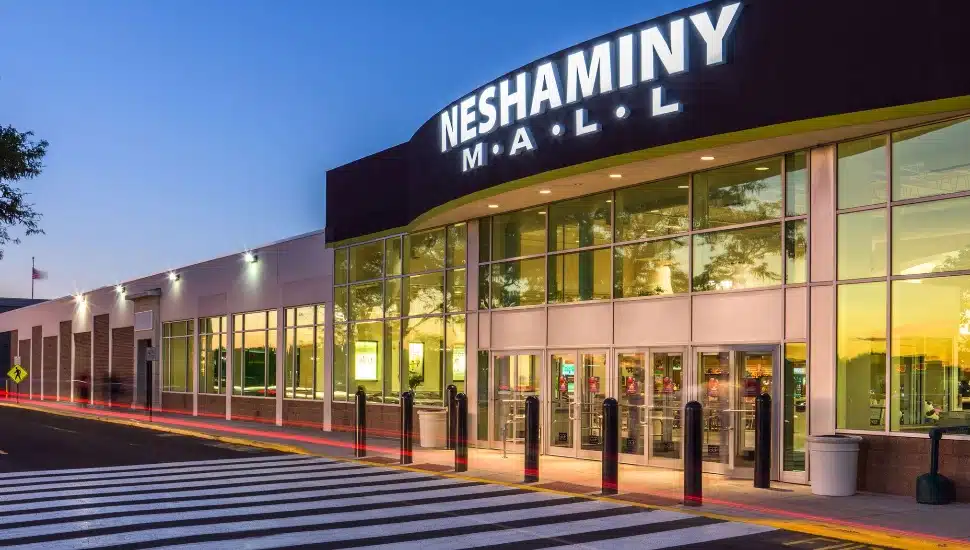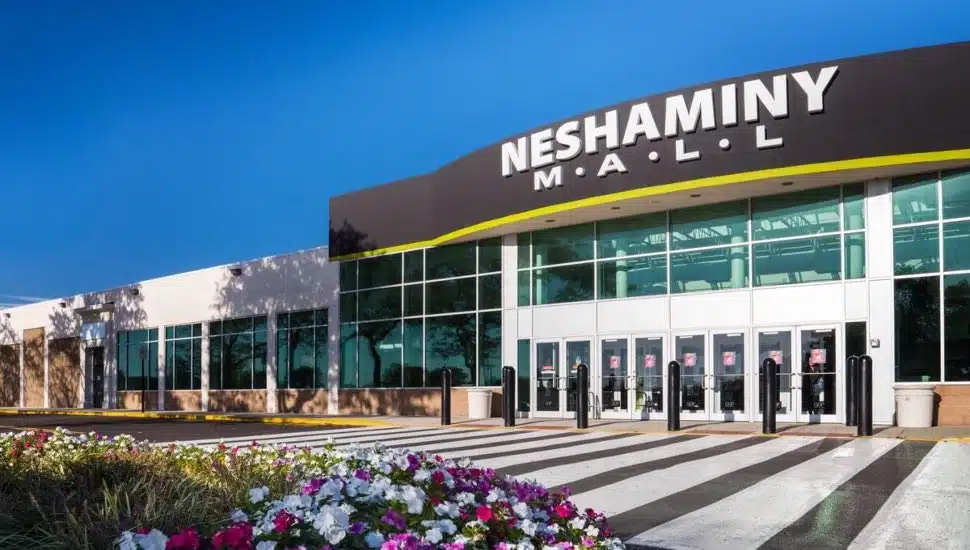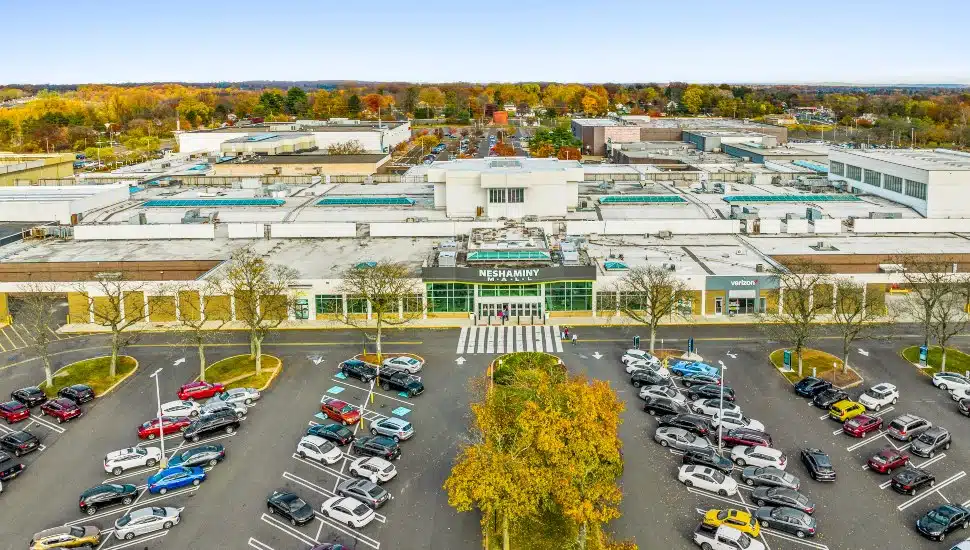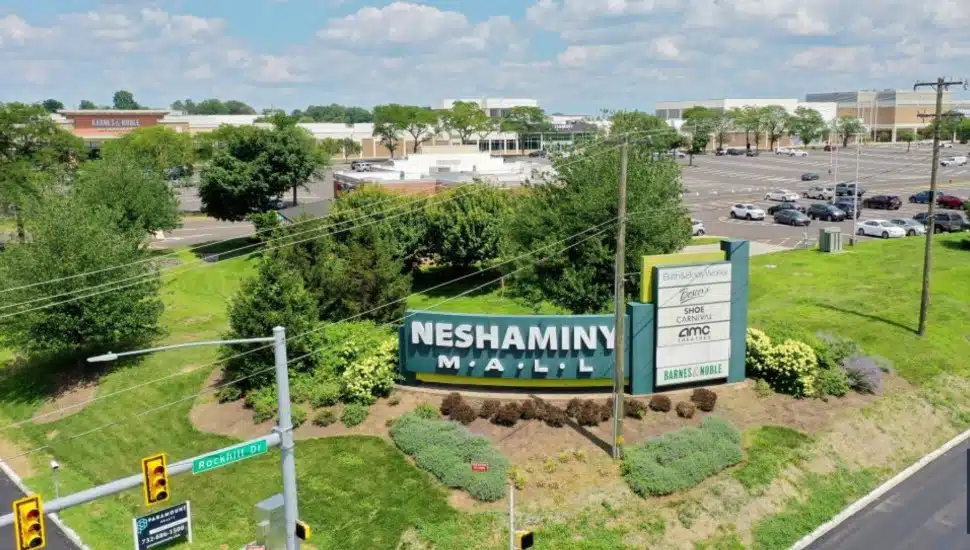
For generations of Bucks County residents, Neshaminy Mall was more than a shopping center.
It was where people saw movies, wandered the food court, bought back-to-school clothes, and spent Friday nights during the height of the suburban mall era.
Now, the future of the Bensalem property appears headed in a much different direction.
In July 2024, Paramount Realty and Edgewood Properties purchased the mall for $27.5 million. The new owners have been working on plans for the 91-acre site ever since.
While no formal redevelopment proposal has been submitted to Bensalem Township, Mayor Joe DiGirolamo has described the project as “very active” and offered the clearest public picture yet of what is coming.
The biggest reason for change is simple. The traditional mall model no longer works the way it once did.
Over the last two decades, department stores that once drove traffic to malls across America steadily declined.
Neshaminy Mall lost its two major anchors when Macy’s closed in 2017 and Sears followed in 2019.
At the same time, online shopping changed consumer behavior while newer retail centers shifted toward convenience, entertainment, dining, and experience-driven destinations.
Still, parts of Neshaminy Mall continue to attract visitors.
Boscov’s alone draws nearly one million shopper visits per year, making it one of the top-performing locations in the entire chain.
AMC Theatres and Barnes & Noble remain important traffic generators as well.
Those three businesses are widely viewed as the foundation of whatever comes next.
DiGirolamo has made clear he sees the reimagined site as something bigger than a local shopping stop. “It’s certainly an attraction to come here,” he told the Bucks County Courier Times in March 2026.
“Not just Bensalem, but a regional place where people can come and shop.”
Based on his public comments, the likely direction involves demolishing a large portion of the existing enclosed structure while building something new around what remains. Prior reporting has indicated that at least 55 percent of the mall, and possibly more, could come down.
That transformation could include:
- Partial demolition of the enclosed mall
- Outward-facing retail stores
- Restaurants and entertainment spaces
- Apartments or townhomes
- Large-format retailers such as Whole Foods and Walmart, which have been specifically mentioned in public discussion
- Walkable outdoor gathering areas
Instead of long interior corridors lined with smaller stores, the property could eventually resemble a suburban town center or a Route 1 mixed-use district designed around multiple types of activity.
Housing is also becoming part of the conversation.
Public discussion surrounding the site has reportedly included townhomes and apartments, age-restricted housing, grocery-focused retail, entertainment uses, and additional community gathering space.
One piece of the puzzle sits just outside the mall’s ownership. The former Macy’s building is a separate parcel, owned by Tony Chowdhury since he acquired it from Sant Properties.
Chowdhury has been one of the more outspoken voices about what the site could become. “Malls are dying, but we can turn them into town centers, which the community needs,” he told Patch in 2023.
His own plan to convert the former Macy’s space into a Fusion Gym with pickleball courts, a pool, and a nine-hole golf course fell apart in 2025 over permitting issues.
The space remains vacant with no active redevelopment plan announced, but his broader vision for the site echoes what officials and developers are saying about the mall property itself.
The approach at Neshaminy reflects a much larger regional trend.
Older malls throughout the Philadelphia suburbs are being repositioned into hybrid destinations built around daily activity instead of traditional department store shopping.
Oxford Valley Mall in nearby Middletown Township is undergoing a similar transformation.
Franklin Mall in Northeast Philadelphia, formerly known as Franklin Mills, was recently acquired by a developer planning to convert it into a mixed-use destination with youth sports facilities, workforce housing, a hotel, and entertainment uses.
The modern suburban retail model increasingly depends on businesses people visit regularly: grocery stores, fitness centers, restaurants, theaters, medical offices, and entertainment venues.
That is a major shift from the older mall strategy, which relied heavily on clothing retailers and seasonal shopping traffic.
It is worth noting that as of early 2026, redevelopment at Neshaminy remains conceptual. Bensalem Township has not received a formal proposal. No construction timeline has been announced.
The owners have not made public statements about when work might begin.
For many Bucks County residents, the idea of Neshaminy Mall changing so dramatically carries a strong sense of nostalgia. The property was one of the region’s defining suburban gathering places for decades.
Its future likely will not look like the mall people remember.
But if the people shaping that future have their way, it may still become exactly what DiGirolamo described: a regional destination.
Just one built for the way people live now.
.
_____