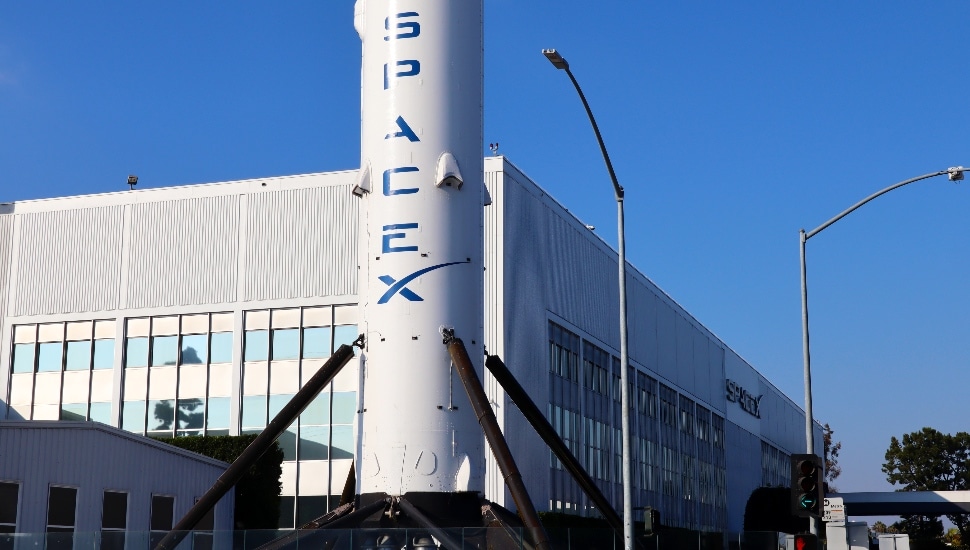
SpaceX completed its blockbuster initial public offering on Friday, and by the closing bell, its valuation had surged past $2 trillion, instantly making Elon Musk the world’s first trillionaire, at least on paper.
The headlines went where they always go: Musk, Starship, the future of space exploration.
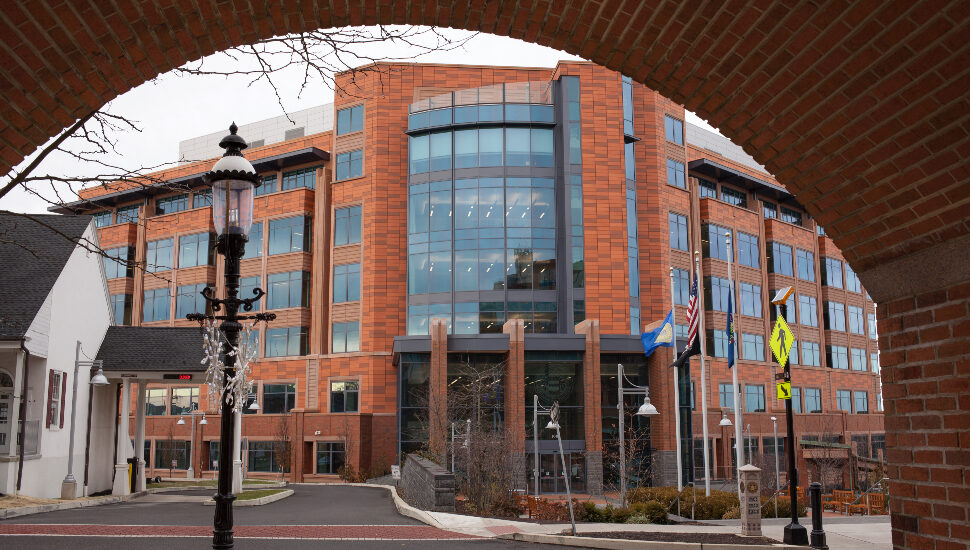
But buried in that story is a quieter one, and it starts in the BNY Mellon Center at 1735 Market Street in Center City.
A Hidden Player in the Aerospace Supply Chain
That’s where Carpenter Technology is headquartered, a company most people have never heard of despite making materials found in aircraft engines, medical implants, defense systems and, increasingly, the modern space industry.
Carpenter manufactures specialty metals built to survive conditions that would melt, crack or warp ordinary steel. According to a recent analysis of the SpaceX supply chain, those materials are now part of Starship and other SpaceX spacecraft, designed to withstand the extreme heat, pressure and stress of launch and flight.
One material tells the story best. Carpenter is one of only two American companies that produce niobium metal, the rare element used in rocket engine “hot ends” because almost nothing else can survive the temperatures there.
The timing is no accident. While SpaceX’s IPO has dominated headlines, Carpenter’s own leadership says demand across the aerospace industry is accelerating fast. In its most recent earnings report, the company pointed to clear and accelerating demand signals across the aerospace and defense market, driven by both OEM production plans and rising order intake.
Wall Street has noticed. Shares of Carpenter Technology, which trade on the New York Stock Exchange under the ticker CRS, have surged roughly 130 percent over the past year and are trading near all-time highs, pushing the company’s market cap to nearly $28 billion.
For investors looking for a way into the SpaceX story without buying SpaceX stock directly, Carpenter has become one of the names analysts point to.
A Pennsylvania Story
Strip away the stock chart, though, and what’s left is a Pennsylvania story more than a century in the making.
Carpenter was founded in Reading in 1889 by James Henry Carpenter.
It started as a specialty steel producer and grew, over more than a hundred years, into a global advanced materials company.
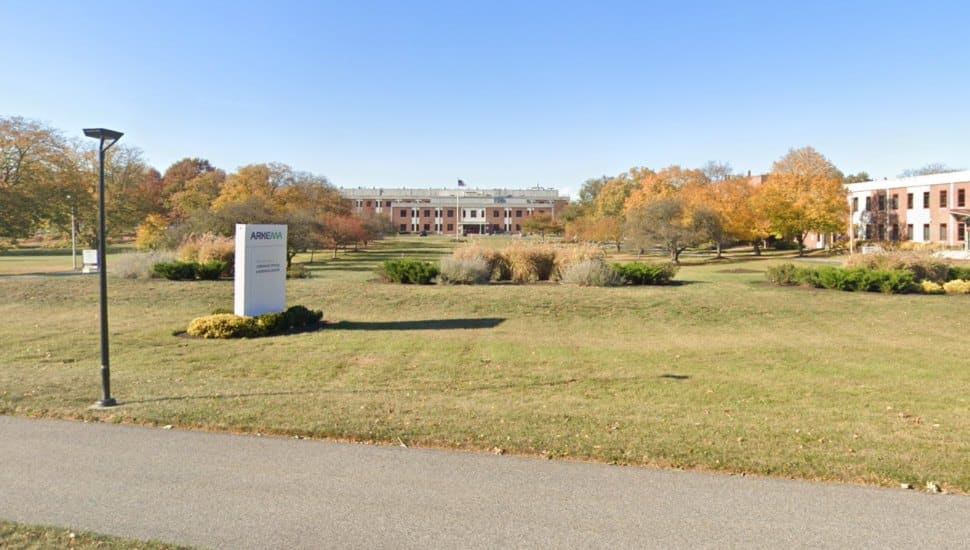
It remains rooted in Pennsylvania today, with major operations in Reading and Latrobe, even as it runs facilities on multiple continents.
The company’s history has some unexpected chapters. In 1898, armor-piercing projectiles made with Carpenter steel were credited with helping the U.S. Navy rout the Spanish fleet at the Battle of Manila Bay during the Spanish-American War.
More than a century later, the company is still in the business of making metal that has to perform when the stakes are highest.
A Seat at the Table
That focus on engineered materials, rather than commodity steel, is the throughline.
Carpenter’s product list includes titanium alloys, stainless steels, nickel-based superalloys, specialty metal powders and materials built for additive manufacturing and 3D printing, the kind of products designed for environments where failure is not an option.
That focus has earned Carpenter a seat at the table with the biggest names in aerospace.
Its customer approvals include major manufacturers such as Rolls-Royce, Pratt & Whitney, GE Aerospace and RTX, and its materials show up in aircraft and engine systems built by Boeing and Airbus.
Those relationships are becoming more valuable as the industry ramps up.
As customers prioritize security of supply for critical applications, Carpenter’s leadership says, the company continues to sign long-term agreements that lock in volume and pricing for years to come.
That customer list helps explain why Carpenter has become an essential link in the aerospace supply chain, and why a significant share of its roughly 5,000 employees work in its Pennsylvania operations in Reading and Latrobe.
A Long History in Space
SpaceX may grab the headlines, but building rockets, satellites and spacecraft takes a vast network of suppliers capable of producing advanced components and materials that can hold up under enormous stress.
Specialty alloys sit near the top of that list.
Carpenter’s ties to space exploration go back further than last week’s SpaceX headlines. The company says its materials have supported missions dating to the Apollo era.
Its 3D-printing division, Carpenter Additive, also produced titanium parts for NASA’s Perseverance rover, which is still exploring the surface of Mars.
What Comes Next
Now, as SpaceX races ahead with Starship and expands its Starlink satellite network, Carpenter is riding a broader wave across aerospace.
CEO Tony Thene told investors the company is delivering record earnings even though the aerospace and defense market is, in his words, “at the beginning of this growth cycle.”
For Philadelphia, that’s the local hook in one of the world’s biggest business stories.
A company founded in Reading 137 years ago, and now headquartered in Center City, has quietly become part of the supply chain building the next generation of space exploration.
As investors celebrate SpaceX crossing the $2 trillion mark, Carpenter’s leadership believes its own story is just getting started.
“The markets that we serve, in particular Aerospace and Defense, Medical and Power Generation, have a strong, multi-year outlook,” Thene said.