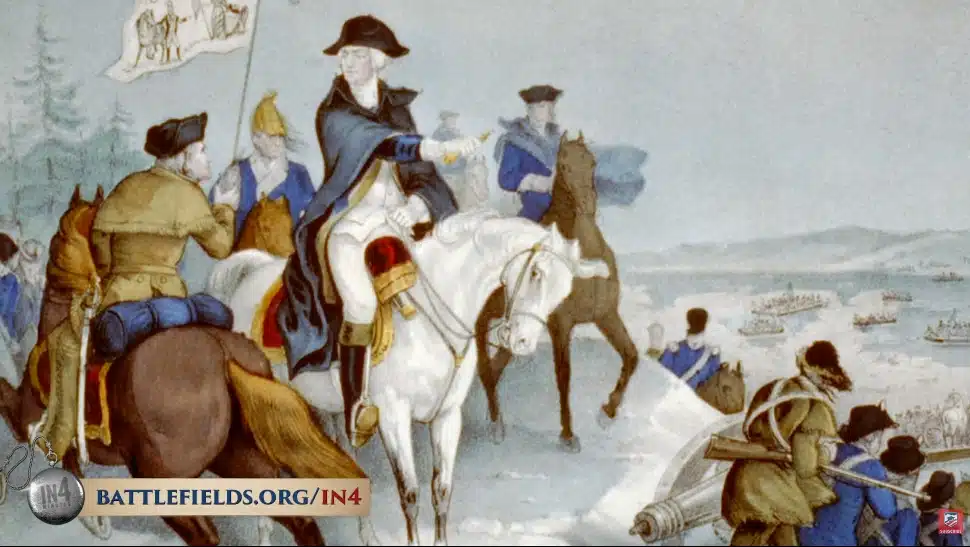

By the last week of December 1776, a full year before the winter encampment in Valley Forge, the fields and riverbanks of Bucks County felt as cold and uncertain as the fate of the Revolution itself.
After defeats in New York City and a desperate retreat across New Jersey, George Washington and the Continental Army camped along the Pennsylvania side of the Delaware River, battered, hungry, and nearly broken.
The people of Bucks County watched it all unfold from their farms and ferries, unsure if the cause of independence could survive the winter.
An Uneasy Refuge
Washington’s troops arrived in towns like Morrisville, Yardley, and New Hope, then known as Coryell’s Ferry, seeking rest and supplies. They were weary and half-frozen, and while some residents quietly aided them, others hesitated.
Much as it is today, Bucks County was a patchwork of beliefs: Quakers urged peace, Loyalists whispered sympathy for the Crown, and most civilians simply tried to protect their homes and livestock. Food was scarce, Continental currency nearly worthless, and the army’s presence strained already thin resources.
Still, Washington’s discipline impressed locals. He forbade looting and insisted his men treat civilians respectfully, earning reluctant admiration even from those who doubted the Revolution’s chances.
A County Divided, a Commander Determined
From his headquarters at the McConkey’s Ferry Inn, today preserved within Washington Crossing Historic Park, Washington plotted one last gamble to revive the American cause.
On Christmas Day, as sleet and wind swept the Delaware, he ordered his men to prepare for a crossing of the Delaware River under the cover of darkness.
His goal: launch a surprise attack on the Hessian troops stationed in Trenton on the New Jersey side of the Delaware River. Success might restore faith in the army and inspire new enlistments. Failure could end the American Revolution entirely.
Local ferrymen, blacksmiths, and farmers stepped up to help. They gathered Durham boats, repaired historic structures, and guided the operation through treacherous ice.
These unsung Bucks County patriots, men like Captain Daniel Bray and the ferrymen at McConkey’s, made Washington’s bold plan possible.
Christmas Night on the Delaware
As darkness fell on Christmas night, Washington’s army, roughly 2,400 men, began its perilous crossing from Taylorsville (today’s Washington Crossing). They ferried horses, cannons, and men across the icy current in a driving snowstorm, illuminated only by torchlight.
Nearby, landmarks like the Thompson-Neely House served as staging grounds and field hospitals, while sentries kept watch from the heights later crowned by Bowman’s Hill Tower.
The other planned crossings further south failed due to ice and weather, but Washington’s main column pressed on through the night.
By dawn, the army had reached the New Jersey shore near what is now Washington Crossing State Park. From there, they marched nine miles through snow and sleet toward Trenton.
Victory at Trenton and Pride in Bucks County
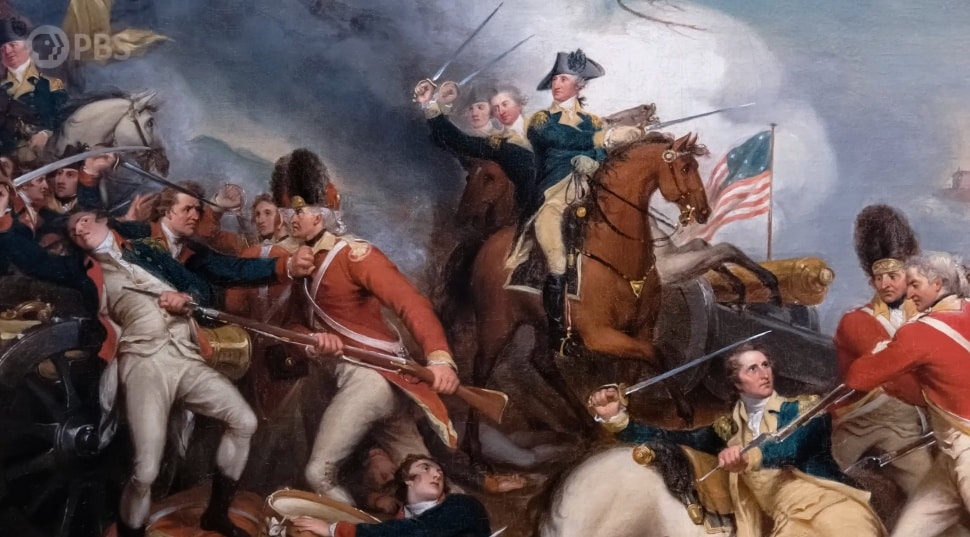
The Battle of Trenton on Dec. 26 was swift and stunning. Washington’s surprise attack overwhelmed the Hessians, capturing nearly 1,000 prisoners while suffering minimal losses.
Word of the victory raced back across the river, and when it reached Bucks County, disbelief gave way to joy.
For residents who had fed, housed, or merely tolerated the army, pride replaced doubt.
Taverns in New Hope and churches across the county filled with talk of “our victory.” Even those who had stayed neutral began to believe the cause could endure.
Legacy of a Local Miracle
Today, Washington Crossing Historic Park preserves the very ground where despair turned to determination.
Visitors can still see the McConkey’s Ferry Inn, walk the riverbank launch point, and climb Bowman’s Hill Tower for sweeping views of the landscape where history bent toward hope.
Across the river, Washington Crossing State Park in New Jersey tells the other half of the story.
The iconic 1851 painting by Emanuel Leutze, “Washington Crossing the Delaware,” may dramatize the moment, but its spirit is true to Bucks County’s legacy: a band of ordinary people, united in resolve, who helped change the course of the American Revolution.
That cold night on the Delaware wasn’t just a daring military maneuver; it was the turning point of the Revolution, a triumph of courage, community, and faith that began in Bucks County.
___________
Forget the famous painting, the real story of Washington’s Crossing of the Delaware is even more incredible.
In this four-minute video, the American Battlefield Trust explains how, after crushing defeats in New York and New Jersey, George Washington risked everything on Christmas night in 1776.
Battling ice, darkness, and a collapsing army, he led the Continental troops across the freezing Delaware River to launch a surprise attack on Trenton that saved the Revolution.
Editor’s Note: This post first appeared on BUCKSCO Today in November 2025.