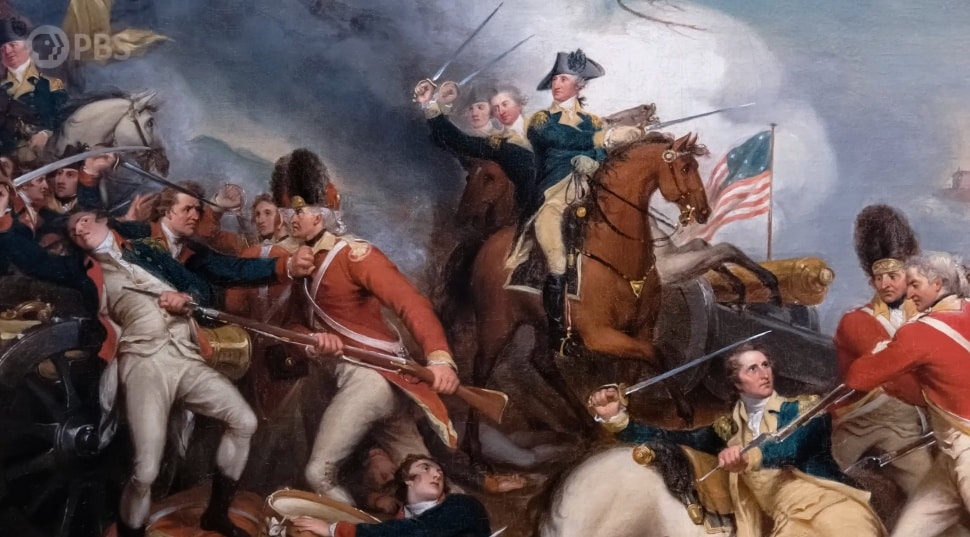
Why Philadelphia? When most people picture the American Revolution, they see muskets flashing in Boston, redcoats marching through New York, or Washington’s army crossing the Delaware River on that frozen Christmas night.
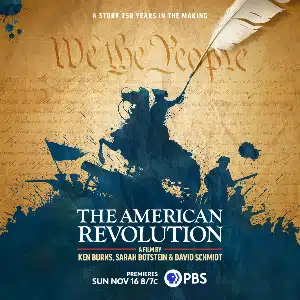
But the true heart of the struggle, where ideas turned into action and independence took root, was right here in Philadelphia, a city so central to the story that it’s featured in each of the six episode of Ken Burns’s The American Revolution.
A City Built for Revolution
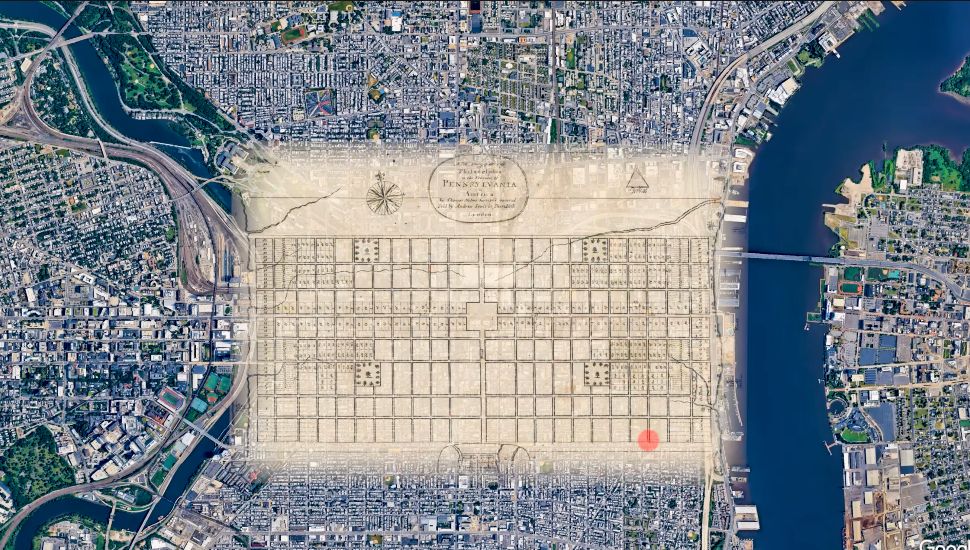
Philadelphia’s central location made it the natural gathering point for the First Continental Congress. Positioned between New England and the southern colonies, it was equally accessible by land and water.
The Delaware River and Schuylkill River linked it to both the sea and the heartland, making travel and trade remarkably efficient.
Meanwhile, other cities couldn’t match what Philadelphia offered. Boston was under siege, New York City was swarming with British troops, and Baltimore, though patriotic, lacked the size and influence to host a national assembly.
Philadelphia, by contrast, was thriving. By the 1770s it was the largest and most sophisticated city in North America, boasting wide streets, busy wharves, and an economy strong enough to support long deliberations about independence.
When delegates met in the Pennsylvania State House (now Independence Hall) in 1774, they found a city built for both comfort and consequence.
A Tradition of Liberty and Learning
From the beginning, Philadelphia was shaped by William Penn’s ideals of tolerance, free thought, and civic responsibility.
That culture of openness created fertile ground for revolutionary ideas to grow. Debates about rights, representation, and equality were nothing new here; they were part of the city’s DNA.
It’s no surprise that the American Philosophical Society, founded by Benjamin Franklin, took root here, or that the First Bank of the United States would later stand only blocks away.
The spirit of inquiry that animated these institutions lives on in the Kislak Center for Rare Books on Penn’s campus in University City, which preserves the pamphlets, letters, and documents that once fueled the Revolution.
From taverns to printing presses, words spread faster here than anywhere else. Franklin’s Pennsylvania Gazette and essays from writers like Thomas Paine carried Philadelphia’s revolutionary spirit across New Jersey and beyond.
The Revolution, before it was fought with muskets, was first fought with ideas, and most of those ideas were printed in Philadelphia.
Where War Met Resolve
But the Revolution wasn’t confined to paper and politics. In 1777, war came to Philadelphia’s doorstep. British troops marched into the city, forcing the Continental Congress to flee to Lancaster and York.
Just 24 miles away, Washington’s army endured a brutal winter at Valley Forge, emerging in the spring as a disciplined, determined Continental Army ready to reclaim the fight.
Nearby battles at Brandywine, Germantown, Paoli, and the siege of Fort Mifflin, turned southeastern Pennsylvania into the Revolution’s proving ground.
Through it all, the Liberty Bell, hidden away from British eyes, became a symbol of the fragile but unbroken hope for independence.
Ideas That Outlasted the War
When the fighting ended, Philadelphia remained the political and intellectual center of the new nation. Here, delegates drafted and debated the Articles of Confederation, wrestling with what self-government should look like.
And here, leaders such as Benjamin Franklin and Benjamin Rush pushed their young republic to live up to its highest ideals.
Rush, physician, reformer, and signer of the Declaration, later reflected, “The American war is over: but this is far from being the case with the American Revolution.”
His words, which close Ken Burns’s PBS series The American Revolution, still echo through Independence Hall and the archives that keep its story alive.
The Beating Heart of Independence
Philadelphia didn’t just host the Revolution, it embodied it. From its rivers to its rare books, its banks to its battlefields, the city united the intellectual, political, and military strands of America’s founding.
While other cities fought for freedom, Philadelphia imagined what that freedom could mean. And that’s why, two and a half centuries later, it remains at the center of the story; not just where the United States began, but where the very idea of America was first believed possible.
__________
Walk Old City with a tour guide, Jim Murphy, who links Penn’s “green country town” vision to Ben Franklin’s hustle, the First Bank, Quaker roots, hard truths about slavery, the Liberty Bell, and our first peaceful transfer of power, plus hidden gems like Parrish’s mural.