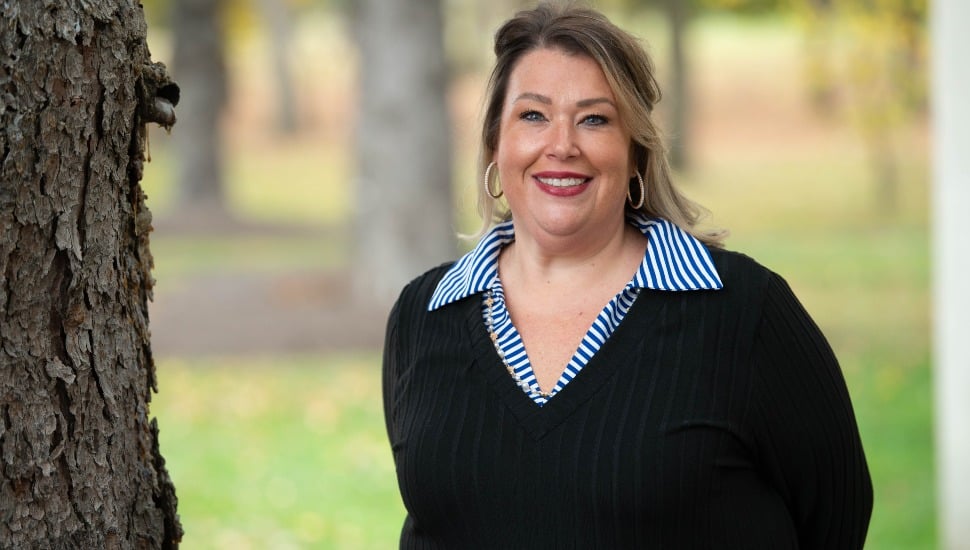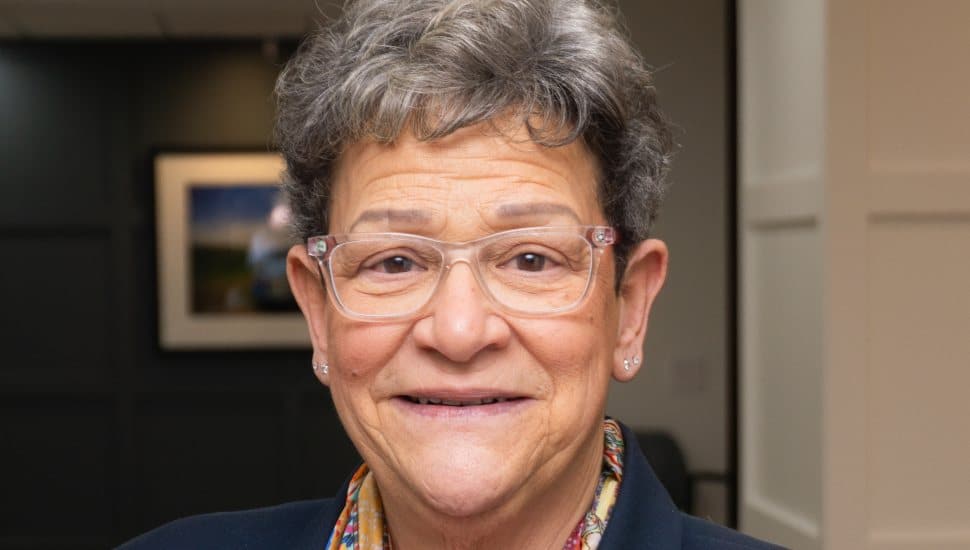

Maria Santangelo, CEO of Barclay Friends, spoke with Bucksco Today about her journey from growing up in Norristown to leading one of the most respected senior living communities in Chester County.
From her early days working alongside her sister at a tobacco company to her experiences in the Peace Corps and Healthcare Leadership, Santangelo’s story is one of service, perseverance, and lifelong learning.
A graduate of Mercyhurst College (now Mercyhurst University), Santangelo credits her education and time abroad for shaping her perspective and leadership style.
After serving in the Peace Corps in Nepal, she built a diverse career in Healthcare (spanning Pediatrics, Rehabilitation, and Senior Living) before joining Barclay Friends in 2024. Today, she is focused on raising awareness about Barclay Friends’ expertise in Dementia Care and its vital role in the Chester County community.
Where were you born, and where did you grow up?
I was born the middle child of three kids and raised in the west end of Norristown.
What did your parents do?
My mom was a stay-at-home parent for most of my childhood. She went back to work at a local factory once we realized how much higher education would cost.
My dad worked in maintenance for John Middleton Tobacco Company for 42 years.
What do you remember about growing up in Norristown?
It was a very close-knit neighborhood. Everyone looked out for one another; you called your neighbors aunt and uncle. If I was getting yelled at by my mom, my neighbors all knew about it!
In the summertime, we would spend almost all of our days outside, all the kids. If anyone whistled that it was dinnertime, the whole neighborhood of kids would hear and go home.
In high school, did you play any sports?
I played tennis. I think I got a spot on the team because I was their biggest cheerleader. When the other girls were playing, I was walking up and down the courts, cheering them on.
What about jobs in high school? Did you work?
My first job when I was 13, and my sister was 12, my dad took us over to the tobacco plant in King of Prussia to help with the expired tobacco.
John Middleton, who now owns the Phillies, was about 17, and he was our boss. I don’t remember what I was paid but that’s where I learned that you take care of your employees.
Herb Middleton’s philosophy was that if somebody goes off the property to get lunch, they take 20 minutes to find someplace, 20 minutes to get back, and that’s 30 minutes of lost time. So, he bought all his employees lunch. He had a contract with this little delicatessen in Bridgeport, and every day it was somebody’s job to take the lunch order for everybody.
What about music? What kind of music were you listening to?
I listened to Peter, Paul, and Mary, all that kind of stuff. That was the first concert I ever went to at the Tower in 69th Street. And I remember seeing U2 at the Vet.
Where did you end up going to college?
I went to Mercyhurst College in Erie. It’s Mercyhurst University now. I wanted to go out of town, far away from home but stay in the state, because I needed to apply for financial aid.
My dad would drive me to Mercyhurst once a year, and the rest of the time I’d take the Trailways bus.
Was Mercyhurst a good choice for you?
It was. In high school, I was an average student. I didn’t excel at anything. But Mercyhurst had professors who had been around the world. We had folks who had been around the world in the military. We had folks who did mission work. We had a lot of kids from out of the country. So, it exposed me to the greater world.
It was a beautiful, small campus, and somebody from a small town like Norristown could have an impact. I felt at home. You could walk anywhere and know somebody. I think my class was four hundred students. I was back there last year, and you wouldn’t recognize it. It’s huge.
That’s where I became the person that I am today. I became more outgoing. I got into the student council. I participated in everything I could.
When it was time to graduate, I said, “I’m not ready to get a job.” A faculty member suggested the military or the Peace Corps, so I joined the Peace Corps, and more so than Mercyhurst, that set me on a path.
Where did the Peace Corps send you?
They first wanted to send me to the Philippines, but Aquino had just been assassinated and the political climate was dangerous. My dad said, “I’ll support you in anything you want to do, but you can’t go to the Philippines.”
So instead, they sent me to Nepal. I didn’t know anybody, didn’t know much about it or what I would do there, but I went through training, learned the language and ended up learning about the world.
Looking back over your career, who were the people who saw promise in you?
If I had to think of one person, it would be Cathleen Stewart. She was the Executive Director at Freedom Village, a Retirement Community that I went to work for in 2010.
Prior to meeting her, I was an occupational therapist, and I’d worked in pediatrics for 10 or 12 years. I’d worked at Children’s Hospital of Philadelphia. A colleague suggested Freedom Village. There, Cathleen invested not only in me, but the whole senior leadership team.
Later on, after starting my own Rehabilitation company, I realized I preferred working on a team. I reached out to Cathleen again, and she said, “Give me three months; I’ll have something for you.” Cathleen went on to become the Executive Director at Pine Run Retirement Community (now Pine Run Village) and offered me a position running Rehab Clinics.
Then she said, “I want you to run Independent Living.” So, I learned how to do that. And then she said, “I want you to learn about dining services. Can you take that over?” She kept giving me opportunities, and she kept investing in the team. We were reading books every two months, such as The Servant Leader, Good to Great, and Not for Profit.
In early 2017, she became ill from breast cancer, and she said, “I want you to be the point person with Doylestown Hospital.” Doylestown Hospital owned Pine Run at the time. I said, “Let Dave do it. He knows all those people.” Dave Charter was the Senior Director of Finance. And she said, “No, I want you to be that person.”
Why do you think she wanted you?
I don’t know. I asked her. I said, “What am I going to do that Dave isn’t?” She said, “You’re going to stand up for Pine Run.” And I said, “But Dave’s going to stand up for Pine Run.” She said, “I know, but I want you in there.” I think she saw something in me.
Cathleen stayed out that whole year, and unfortunately, her breast cancer got worse. In January of 2018, she said she was too sick to return to work. So, the hospital made me Interim Executive Director. Unfortunately, she passed away in 2019.
In June of that year, Jim Brexler, the CEO of the hospital, said, “Maria, we’re going to post the position.” I’m said, “Okay, are you going to let me interview?” He laughed and said, “You just had a year-long interview. You don’t have to interview.”
A week later, we were walking into a meeting in front of all 250 residents for independent living, and he said, “I’m going to tell them that you’re the Executive Director now.”
Did you ever imagine you would be the executive director?
Never. But Cathleen always kept investing in me, always kept pushing me and challenging me.
How did you get to Barclay Friends?
Doylestown Hospital sold Pine Run to Presbyterian Senior Living in 2023; I stayed on at Doylestown Hospital for some time to help finalize the sale of the community, and I left later that year. I wanted to stay in Senior Living and began looking for positions in the field.
I knew of Barclay Friends’ reputation, because I had worked for the Devereux Foundation in West Chester when I got back from the Peace Corps. After consulting some close friends and colleagues, they all spoke highly of Barclay Friends and encouraged me to apply for the CEO position. After a series of interviews, the board of directors offered me the position in March 2024.
How would you like Barclay Friends to be known in the community?
We are a small community within a community. We spend all of our time learning about and training our staff on Dementia. I want Barclay Friends to be known as the experts in Dementia Care in Chester County. If we can go further out to Montgomery County or Delaware County, I would welcome that.
What are you focused on this year? What are your priorities? What projects are you working on?
In May, we opened another secure Dementia Care neighborhood. It’s 24 beds, and we have 12 residents in those beds right now. Our goal is to help the community understand what we have to offer. We want to have folks move in, and we want to go out and talk to staff and families.
Being experts in Dementia Care doesn’t mean that we just take care of people. It means that we educate.
We’ve made presentations to the Bar Association and to some banks. I met with the police chief and the mayor of West Chester and offered to come and train their staff, because the police often get called into stressful situations, and the people they’re encountering may have Dementia, so this helps them with those kinds of interactions.
What are you excited about, looking into the future?
I’m excited for repositioning Barclay Friends as a leader in dementia care. A lot of folks with dementia are younger; we have folks in their 60s and 70s.
I’m excited to get out in the community and share what we’re doing. We received the Memory Care Seal of Excellence from the National Council of Certified Dementia Practitioners, which means we’ve trained more than 80 percent of the staff about dementia care. We’re the first program in this are to be certified.
What do you do with all that free time that you have?
I love going back to Nepal. A few times, I’ve raised money from my friends and family to help with things there. They had an earthquake in 2015, so I connected with my Peace Corps trainers from the ’80s and said, “What do you need?”
They said, “We need book bags and supplies for kids in school.” Another one said, “The women’s organization needs some help.”
How much did you raise altogether?
My first trip, I raised about $20,000. We went over with a lot of cash, and we built some temporary homes. We brought in 100 book bags, and I had the Peace Corps staff go into Kathmandu with the money and buy everything that goes into those book bags.
A friend of mine said, “I’ll get you the name of the owner of the company that makes filter straws.” So, I called him, and he sold me 100 straws at cost. I gave those out to kids.
I talked to the women’s group, and they said, “We just need a place to meet. We meet out in the field.” So, I raised more money, came back, and we built a building for $3,500.
One of the Peace Corps’ goals is that you bring what you learn back, and you teach people, and you talk about it. The last time I went back to Nepal in 2020, there were still parts that didn’t have electricity or running water. It’s a completely different perspective.
Three last questions for you. What’s something big that you’ve changed your mind about over the last 20 years?
That if you think you can do something, you probably can. I learned that from the Peace Corps and other opportunities. In 2015, I was saying to my family and friends, “Give me some money, I want to go and do some good in Nepal,” and then we did it, and we did it again for four years after that.
It’s a crazy world out there. What keeps you hopeful and optimistic?
My nieces and nephews. My great-niece is only three years old, and everybody is her friend. Her birthday party had every child in her preschool there. I think about her, and I want her to have the opportunities that I had.
Finally, Maria, what’s the best advice you were ever given?
I was at the airport about to leave for Nepal for the first time. I’m 21 years old, I’m crying, I really want to go, but I’m scared. My dad said to me, “You have to give it six months. If you give it six months and then you don’t want to be there, okay. But you can’t pass up this opportunity.”
I probably would have come home in a couple of months, because it was hard, but I had that in the back of my mind. Don’t pass up this opportunity. And it was incredible. That advice led me to where I am today.
________
Publisher’s note: Helen Harris contributed to this profile.