When Julie Morrissey, the Assistant Director of Middle School at Abington Friends School, first heard about AFS’s Conscious Communities program, she felt a familiar uncertainty.
“I heard that students met in affinity spaces by race, and I got a pit in my stomach,” she said.
She had past experiences around affinity spaces that had made her hesitate — as someone who was multiracial, should she go with the African-American space or the Hispanic space? Often, these spaces can feel like one is being put into a box, with no room to express oneself. But she was pleasantly surprised by what she found.
“Within a few seconds, I saw there was a multiracial space, and thought, ‘Oh, that’s so cool!’” said Morrissey. “They weren’t going to force me to check one box. It was nice to have that flexibility to see that we would recognize that people could be many things at once.”
That early moment of uncertainty would become the foundation for a program that invites curiosity instead of fear, and identity is explored not assigned.
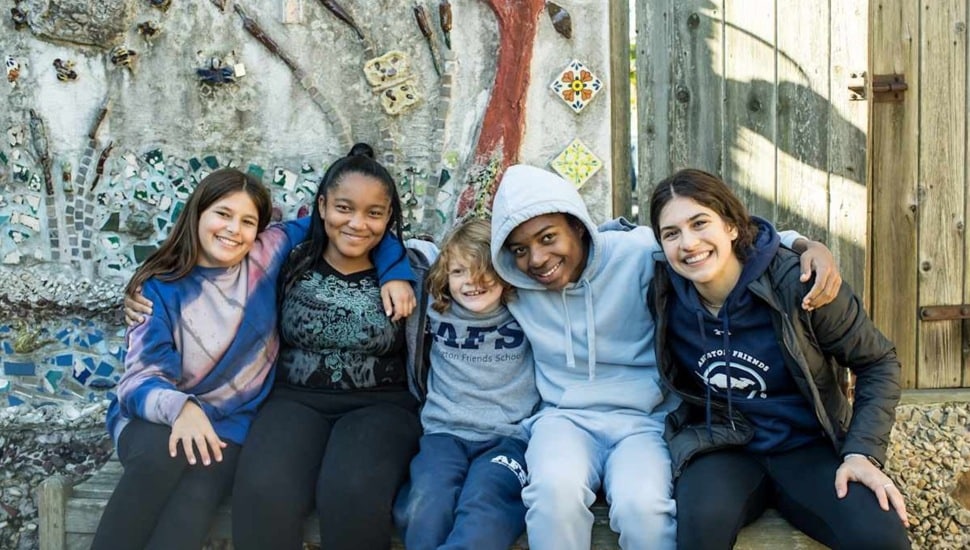
That spirit of openness — of allowing students to explore who they are without pressure or judgment — has shaped the evolution of Conscious Communities at Abington Friends School. What began several years ago as a set of racial affinity groups has grown into a thoughtful, layered program that blends identity exploration, empathy building, and real-world learning. The goal, Morrissey explains, is to help middle-schoolers figure out who they are.
“They’re these cute little amoebas trying to latch onto anything and everything, figuring out who they want to be in the world,” she said.
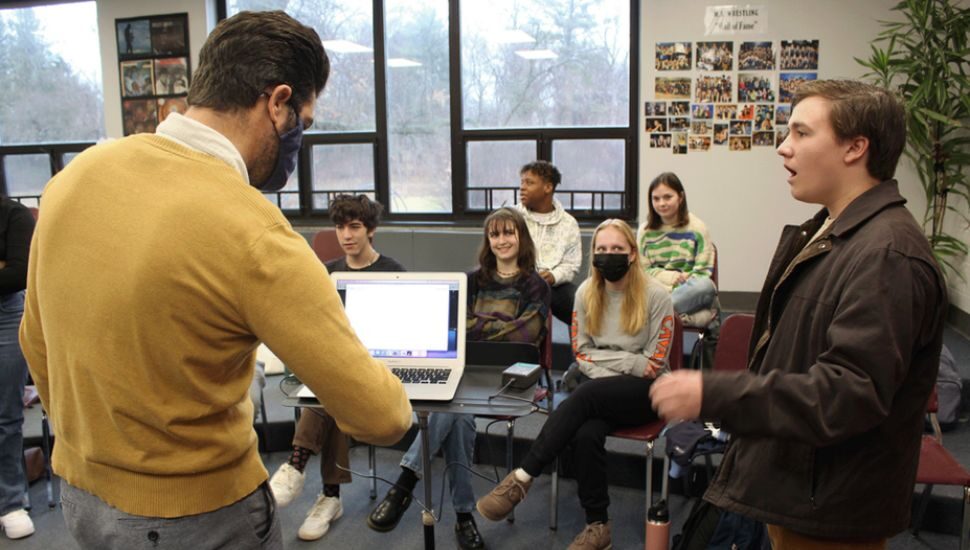
Today, Conscious Communities operates on several levels, balancing reflection and exploration. Throughout the year, students gather in affinity spaces — groups where they can connect with peers who share aspects of their identity, whether racial, cultural, or gender-based. These spaces are intentionally flexible: students with multiple or evolving identities can move freely between groups as they grow and learn. If a space doesn’t feel like the right fit, they can simply switch, no questions asked. The goal is to create a sense of belonging without putting anyone under a spotlight during what is often a fluid and formative stage of identity development.
Alongside affinity spaces, the program now includes teacher-led electives that invite students to engage across lines of difference. These courses are as creative as they are meaningful. “Let’s Talk Disney” uses popular films to unpack themes of gender, power, and representation, while “Are You in the Man Box?” invites boys and men to explore and challenge societal expectations of masculinity. Other offerings examine culture, activism, and belonging through literature, art, and storytelling, giving students the chance to connect, question, and grow together in new ways.
“When students choose to enter a space out of interest, rather than being assigned, the learning goes deeper,” Morrissey said. “It’s not about being told what to think. It’s about discovering what they care about and how to express it meaningfully within a community.”
Grade-level sessions also connect Conscious Communities to the school’s broader curriculum. In seventh grade, students design their own societies based on the Quaker testimonies — known as the SPICES (Simplicity, Peace, Integrity, Community, Equality, and Stewardship) — and reflect on the values and guiding principles that would shape those communities. They also explore the cultural elements of each society, imagining what people might wear in a Simplicity Society or how a Community Society might organize its government and make decisions together. Other grades examine media literacy and digital citizenship.
This year, sixth-grade students are focusing on Philadelphia as a living classroom, exploring neighborhoods, culture, and history to understand the complex systems that shape the city they call home. Each grade-level program connects with the themes of the year that they are learning about in the humanities, science, and other disciplines to give students a developmentally appropriate space to reflect and grow.
And as the program matures, the community’s understanding of it has deepened.
“There’s always a temptation to try to meet every need for every child,” Morrissey said, “but we’ve learned that what matters most is creating spaces where students feel seen, valued, and safe to be curious.”
That curiosity — about oneself, about others, and about the world — is what Conscious Communities ultimately nurtures. If students come away learning the simple skill of listening with empathy, they’ve already taken the first step toward creating the kind of conscious, caring community our world needs most.
Learn more about Abington Friends School and how it cultivates intellectual excellence, fosters strength of character, and supports the growth of each student’s unique talents.