October 2025 marks the 80th anniversary of National Disability Employment Awareness Month (NDEAM), a reminder of the continued importance of including people with disabilities in America’s workforce.
What began in 1945 as a weeklong event focused on the contributions of workers with physical disabilities has grown into a full-month campaign that highlights employment opportunities – including those for individuals with mental health conditions and non-visible disabilities.
This year’s theme, “Celebrating Value and Talent,” invites employers, job seekers, and self-employed professionals to recognize the unique strengths and perspectives that people with disabilities bring to the workforce (Department of Labor).
Why This Matters for LinkedIn and Your Career Brand
As someone who works in resume writing, LinkedIn profiles, and career education, I bring experience creating individual career plans for adults, drawing on my background of writing Individual Education Plans (IEPs) and Gifted Individual Education Plans (GIEPs) for K-12 students.
While earning nine K-12 Pennsylvania Department of Education certifications, I also advocated for my AuDHD (Autistic and ADHD) child, who is now an adult. Over her entire life, I was her advocate, constantly boosting her self-esteem and “being there” when she needed me.
How do I differentiate myself from other career coaches who write resumes and LinkedIn profiles? I am a teacherpreneur, teaching clients “how to” drive the stick shift in their job search and not providing a “done for you.”
Collaboration is essential in the process, as clients need to LOVE the result, and they do when they help build stellar documents.
Contracts are not necessary to sign when most of the work is done LIVE. Clients also have their own AHA moments doing homework, as I “chunk” assignments, unless they choose to have me do certain parts to save them time.
Even though I have a soft spot in my heart for those with visible and invisible disabilities, most of my clients are highly educated professionals. They have PhDs, DOs, MDs, and MBAs, all the way down to their college-student children who need to find internships, or they graduated from college and need to fast-track the learning curve to get their career documents in order.
1. Keyword and Profile Optimization
On LinkedIn, many job seekers with disabilities may hesitate to highlight their disability identity or related experience. I guide them to their keywords that speak to inclusive employment, accessibility, diverse talent, reasonable accommodations, adaptive technology, or disability advocacy. These help profile visibility when organizations search for inclusive talent, but to the extent they wish to share
2. Story-telling and Authenticity
Individuals can provide narratives on LinkedIn through a post, article, or About section with what they feel comfortable sharing.
Such stories help job seekers and employers alike signal commitment to inclusion.
On the employer side, LinkedIn company pages and job postings can incorporate messaging such as, “We believe in celebrating value and talent, especially from people who bring different lived experiences to our workplace.”
3. Employer Branding and Job Seeker Alignment
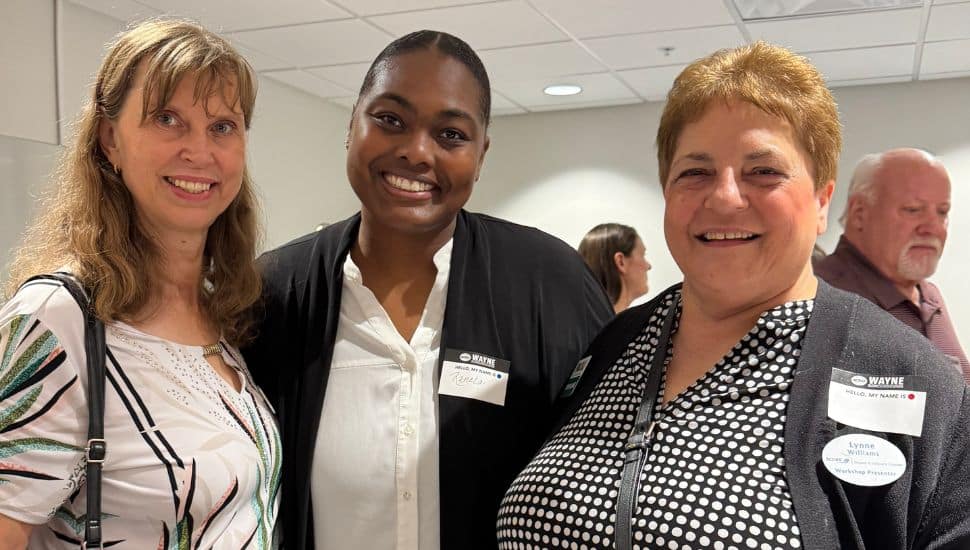
As our 501(c)3 nonprofit, we have typically used the acronym DEIBAJ instead of DEI to be even more inclusive: diversity, equity, inclusion, belonging, accessibility, and justice. Everyone is welcome to learn and network with us, and we encourage attendees to connect on LinkedIn to help build their networks.
LinkedIn is more than a job board. It’s a branding platform for career professionals.
Employers who highlight disability inclusion not only benefit from diverse talent, but research shows that inclusive workplaces tend to outperform peers (The ARC).
On LinkedIn, individuals can review if a company’s LinkedIn presence mentions disability inclusion, accessibility, resource groups for employees with disabilities, etc., when deciding where to apply.
Three Practical Actions on LinkedIn
Here are tangible steps to incorporate NDEAM into your weekly blog or LinkedIn posts:
- Publish a LinkedIn article or post: Write about NDEAM-2025, highlight successes of people with disabilities in the workforce, and tie it to how job seekers can shape their LinkedIn profile to reflect inclusive skills and experiences. Use hashtags like #NDEAM and #DisabilityEmployment (The Campaign for Disability Employment).
- Attend a “LinkedIn Profile Audit” workshop: We offer virtual sessions at the Great Careers Network nonprofit, where we review LinkedIn profiles and make suggestions to improve the content or keywords (e.g., “inclusive leadership,” “accessible design,” “adaptive solutions”) and how to showcase achievements that reflect value and talent.
- Encourage employer-engagement posts: For individuals looking to be self-employed or find a job, they can write a post acknowledging NDEAM or a topic they are passionate about.
For example, start with, “In recognition of NDEAM’s 80th year, I believe that workplace inclusion is not simply policy, but a strategic advantage. Here’s how I bring value…” This demonstrates awareness, thought-leadership, and alignment with an inclusive workplace culture.
Here are my specialty articles: ADHD, Autism, & Neurodiversity
Why the 80th Anniversary is Significant
Marking 80 years reminds us that disability inclusion is not a new topic, but one whose relevance is growing as workplaces evolve, remote/hybrid work proliferates, and technology opens new possibilities.
For our audience of job seekers, employed, and self-employed, we:
- Emphasize highlighting relevant transferable skills: Many people with disabilities develop resilience, problem-solving, adaptability, and innovative thinking, which are all great for LinkedIn branding.
- Emphasize inclusive vocabulary: Words like “accessibility,” “universal design,” “adaptive strategies,” and “diverse perspectives” are increasingly used in job descriptions and company culture statements, and professionals should mirror these.
- Emphasize networking and community: LinkedIn groups, disability-employment workshops with subject matter experts (SMEs), and hashtags tied to NDEAM can be leveraged to build connections, showcase expertise, and signal inclusion.
Closing Thoughts
This October, as NDEAM reaches its 80th year, let’s emphasize the practical importance of recognizing and communicating the value and talent that people with disabilities contribute, showing that inclusion drives professional and organizational success.
Optimizing LinkedIn profiles, crafting authentic stories, weaving in keywords aligned with inclusive employers, and engaging in meaningful conversations, you can build your personal brand to earn a living in a workforce where every person, regardless of ability, has the chance to thrive.
Let’s ensure this NDEAM centers not just on awareness, but on actionable, inclusive steps that benefit every professional and workplace.
Employers, did you know you may be able to get a tax credit for hiring someone with a disability? Read about the Form 8826 Tax Credit on the IRS website and further details.
NEXT STEPS
- Subscribe to my newsletter on LinkedIn™ for bright ideas on how to manage your career.
- Subscribe to the Great Careers Network Substack
- If you need a resume or LinkedIn™ profile to get you to your next step, book a call to chat! Can’t beat a free discovery call!
- Join as a member at https://greatcareers.org/membership
- Follow #GreatCareersPHL
UPCOMING EVENTS
Join us for monthly events at our Nonprofit Events Quick List Page
- Mon Oct 27 – The Magic of Top Performance
- Mon Oct 27 – Immigrant Professionals Career Success Group: Navigating the U.S. Job Market
- Tue Oct 28 – Beating the Applicant Tracking System (in-person Philadelphia)
- Tue Oct 28 – Life Sciences Cares Job Seeker Series (in-person Philadelphia)
- Tue Oct 28 – How to Write Your First Book
- Tue Oct 28 – Business Executives Networking Group & ChemPharma
- Wed Oct 29 – Ethics in the Workplace Today – What You Don’t Know You Don’t Know
- Wed Oct 29 – Job Search Techniques
- Thu Oct 30 – Life Sciences Cares Job Seeker Series (in-person Philadelphia)
- Thu Oct 30 – Corporate to Entrepreneur – Leveraging AI to Reinvent Your LinkedIn Presence