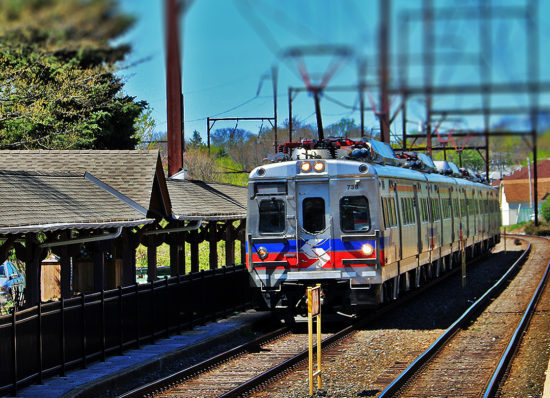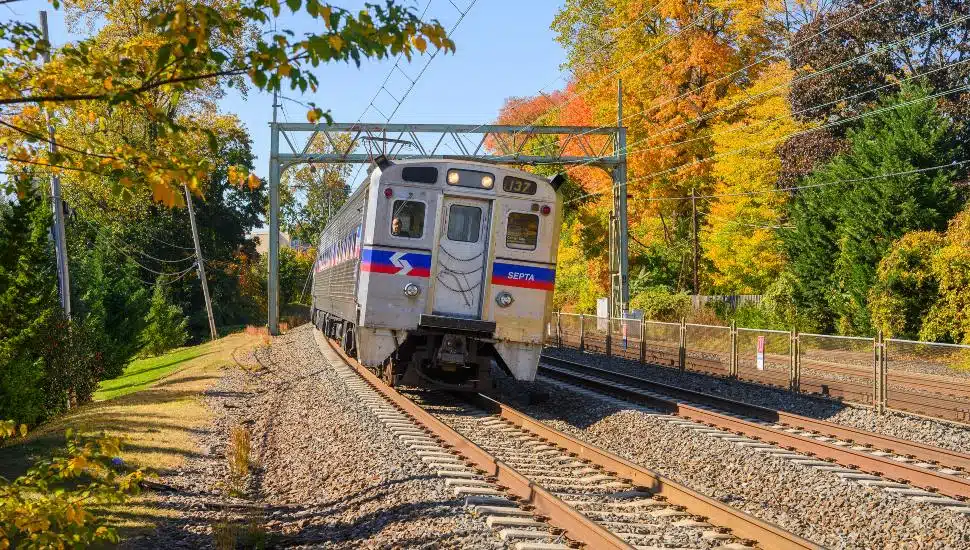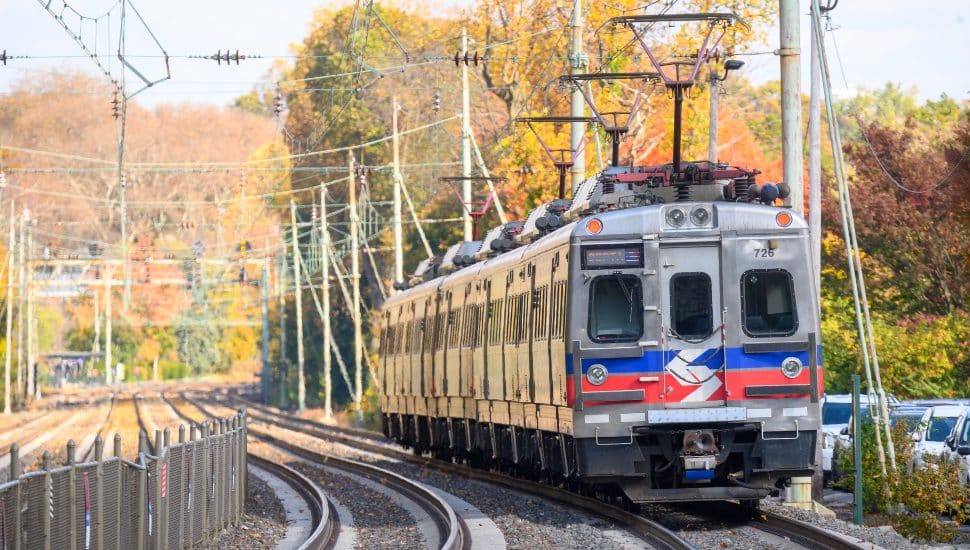
Potential SEPTA cuts that could lead to the elimination of the Paoli/Thorndale Line may adversely affect transit-oriented development in the area, writes Denali Sagner for The Philadelphia Inquirer.
Stakeholders in the region have been pushing to embrace transit-oriented growth in recent years, a model that focuses on building residential buildings, offices, retail, and restaurants in walkable environments near public transit.
Such mixed-use development ushered in a mini renaissance in Malvern, one of the stops on the Paoli/Thorndale Line.
A similar transformation has occurred in other communities along the Main Line, thanks to their proximity to the rail service. According to Carrie Kohs, president of the Ardmore Initiative board of directors, Ardmore was “a very different place to live” a decade ago, with vacant storefronts and rundown buildings.
“The catalyst for the revitalization here was transit-oriented, mixed-use development,” she said.
But things have since changed, putting the line in danger of elimination. In 2019, the train line reported nearly 6.2 million annual riders and $28 million in passenger revenue. After the pandemic hit, ridership collapsed, and the recovery has been slow.
Last year, the line saw 2.9 million annual riders who generated $13 million in revenue.
To learn more about how SEPTA’s potential cuts could reshape local development and the future of the Paoli/Thorndale Line, read through the full article on The Philadelphia Inquirer.
________
Editor’s Note: This post was originally published on VISTA.Today in June 2025.