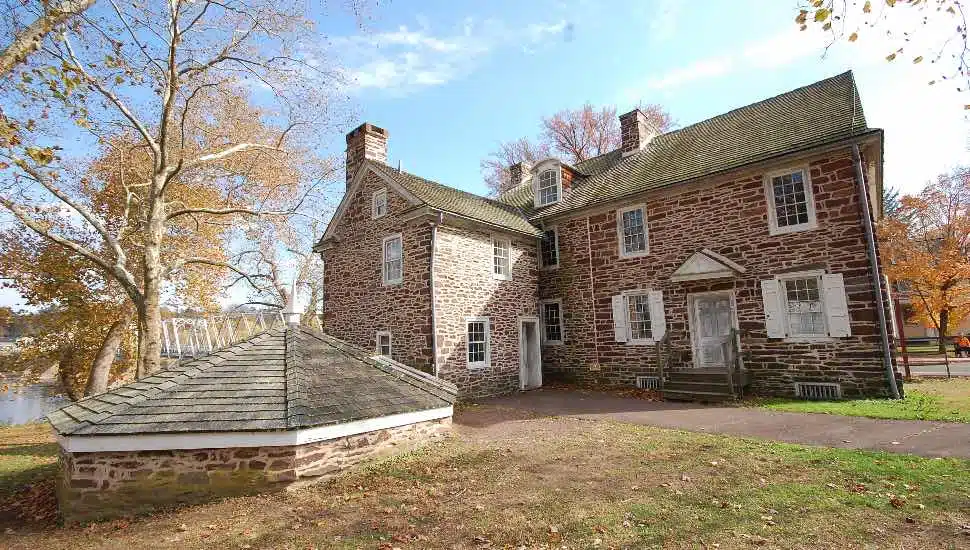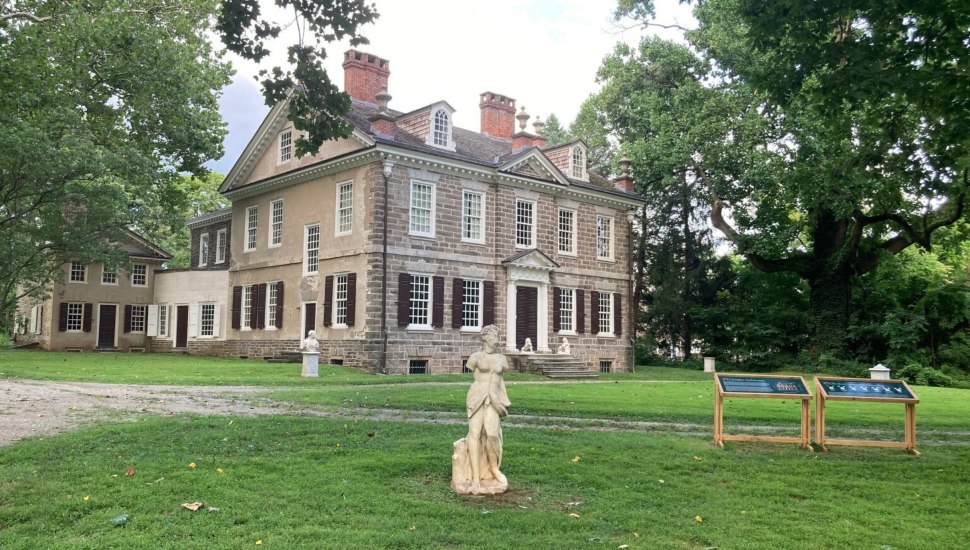
Standing on the grounds of Cliveden in Germantown, it’s easy to feel the weight of what happened here.
Musket fire tore through these walls during the 1777 Battle of Germantown. British soldiers barricaded themselves inside while Continental troops, including forces under George Washington, tried to break through.
The stone facade still bears the scars.
But Carolyn Wallace wants visitors to feel something else, too, writes Nathaly Suquinagua for Billy Penn at WHYY.
Wallace, Cliveden’s education director, is part of an effort to expand what the National Historic Landmark site means to the people who live in its shadow today.
Built in 1767 as a country retreat for attorney Benjamin Chew and occupied by seven generations of his family, Cliveden is a masterwork of Georgian architecture and one of Philadelphia’s most significant historic properties.
It is also the site of a plantation that depended on enslaved labor, a fact the institution is working to place at the center of how it tells its own story.
The Chew family left behind roughly 230,000 documents, now housed at the Historical Society of Pennsylvania.
“There’s just so many stories that are in that record that we’re still unpacking,” Wallace said. Those records, she added, illuminate “a much larger network of enslavement here in the Mid-Atlantic.”
Cliveden now uses tours, exhibits, and community partnerships to close the distance between that history and the present.
Through a project called “Transcending Thresholds,” community members help shape the narratives the site tells.
The Revolution can feel like something that happened a long time ago and far away, Wallace said.
At Cliveden, she notes, it happened “right where you’re standing, right in your neighborhood.”
For a deeper look at how Cliveden keeps Germantown’s history alive today, read the full article at Billy Penn at WHYY.
_____