Pennsylvania American Water is investing in the future of clean, reliable water with the development of its new Lock 57 Water Treatment Plant — a project that not only addresses aging infrastructure and growing demand, but also highlights the people behind the work making it all possible.
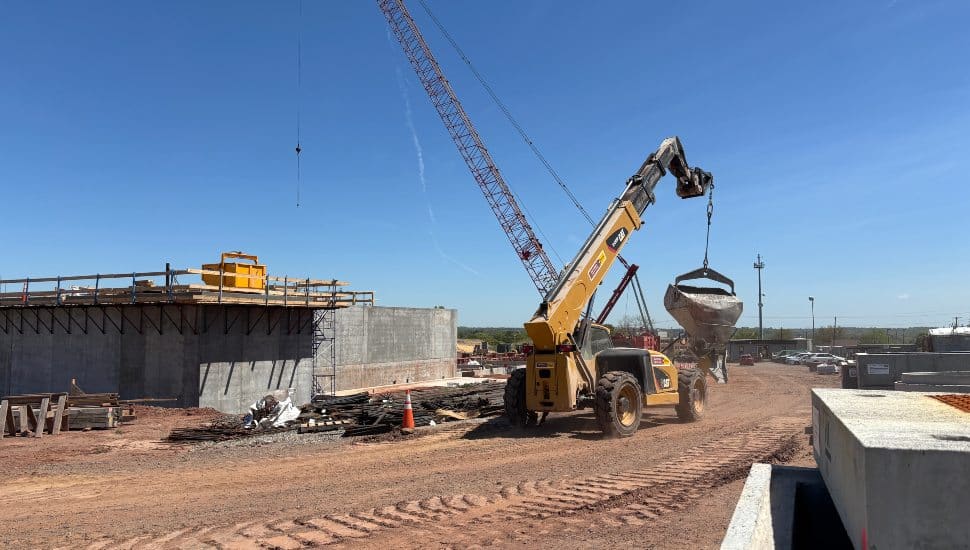
Located in East Vincent Township and set to provide water to approximately 52,000 residents, Lock 57 is being constructed to serve Pennsylvania American Water’s Royersford District, which spans nine municipalities across Chester County (East Pikeland, East Vincent, Schuylkill, and West Vincent townships, and Spring City Borough) and Montgomery County (Limerick, Lower Pottsgrove, and Upper Providence townships, and Royersford Borough). Ground was broken in October 2023, and the new facility is expected to be completed by summer 2027, with operations anticipated later that year following testing and commissioning.
The Need for a New Water Treatment Plant
The need for the project is rooted in both growth and necessity. The district’s current water treatment facility, the Shady Lane Plant, was built in 1918 and doesn’t have the capacity to meet the growing demand of the region. While it produces approximately 3.5 million gallons per day, that’s roughly one million gallons short of what the region requires. The deficit is supplied through interconnections with adjoining water systems.
In addition to growing demand, the developing understanding of per- and polyfluoroalkyl substances, often referred to as PFAS, has had an impact on Pennsylvania American Water and all water suppliers across the state and the nation.
According to the Pennsylvania Department of Environmental Protection, PFAS are man-made chemicals used to make cookware, carpets, clothing, fabrics for furniture, paper packaging for food, and other materials, as well as firefighting foams. The chemicals do not readily break down when exposed to air, water, or sunlight. Exposure to PFAS is known to have a number of adverse effects in laboratory animals and humans.
While state standards for PFAS have been in effect since 2023, federal standards are set to take effect nationwide in 2031.
“We are committed to providing the highest quality and most reliable water service for our customers,” said John Kelemen, Manager of External Affairs. “With Lock 57, Pennsylvania American Water will be meeting federal guidelines well before they go into effect.”
Pennsylvania American Water is spending $143 million to build the new Lock 57 plant. That investment will increase capacity, ensure outstanding water quality, and support long-term population growth in the region.
“Access to clean water is essential. If that access isn’t there, it makes it difficult to build or expand schools, medical facilities, and other assets that are critical to the quality of life and a vibrant economy,” Kelemen added.
From the Field to Engineering: Danni Yoder’s Journey
While the scale of the project is significant, the story of Lock 57 is also a human one — embodied by team members like Danni Yoder, a Senior Coordinator in Pennsylvania American Water’s Engineering Department who has played an integral role in supporting the project’s development.
Yoder, a graduate of Spring-Ford High School, is a lifelong resident of the area served by Pennsylvania American’s Royersford District. Yoder’s journey with Pennsylvania American Water began in the field, with little prior knowledge of the industry.
“I’m not going to lie; I knew nothing about water,” she said. “But Pennsylvania American brought me in, trained me, and I just kept asking to learn more.”
Starting as a Utility Worker, Yoder spent several years gaining hands-on experience before moving into Operations and eventually into Engineering support.

“I kept asking for more opportunities to learn and grow,” she said. “I was always saying, ‘Please send me whatever — I want to do it all.’ And I’m grateful that they gave me the chance to grow and develop professionally.”
Today, Yoder plays a key role in coordinating elements of the Lock 57 project, from purchase orders and permitting to working with developers and ensuring project alignment.
“With Pennsylvania American Water, I have a career, not just a job; working here has given my husband and me the chance to buy a home and provide a good life for our family,” said Yoder, a mother of three.
Building for the Future — and Preparing for What’s Next
The development of Lock 57 is closely tied to regional growth, particularly in areas like Royersford and Montgomery County, where new housing and commercial developments continue to expand.
“With all the development going on, we just didn’t have the capacity for the future,” Yoder explained. “This new plant is going to provide great water and support for that growth.”
The importance of upgrading infrastructure became especially clear in 2024, when a major flood impacted the aging Shady Lane Plant, forcing a temporary shutdown.
“It was a little scary,” Yoder said. “With the new plant, we won’t have to worry as much because it will provide significantly more capacity.”
Kelemen noted that moments like this reinforce the need for long-term investment.
“When you have a plant that’s more than 100 years old, it’s a challenge to fix equipment or processes when they break down,” he said. The Shady Lane plant has served the area remarkably well, but it’s time to hand off its role to a facility built for the demands of the present day and beyond.”
Beyond infrastructure, the project also reflects a commitment to the community. For Yoder, the work feels especially meaningful.
“This plant is going to help make sure people, including many of my family members and close friends, don’t have to worry about their water,” she said. “It’s clean, reliable, and there when you need it.”
As construction continues, Lock 57 stands as both a forward-looking investment and a reflection of Pennsylvania American Water’s commitment to its customers.
“It’s cutting-edge technology,” Kelemen said. “And it’s a great example of our commitment to delivering clean, reliable water to our communities.”
Learn more about Pennsylvania American Water and how it provides regulated water and wastewater services to approximately 2.3 million people across Pennsylvania.