Most people know Bucks County for its river towns, main streets, covered bridges, and historic landmarks.
Fewer know the deeper stories that helped shape the region over the last 300 years.
That is about to change.
The African American Museum of Bucks County is set to open its permanent home at Boone Farm in Middletown Township this summer, the culmination of more than a decade of work by a small group of people who refused to let the county’s full history go untold.
Harvey Spencer and Millard Mitchell started it in 2014 with a van, a volunteer crew, and a collection of traveling exhibits they hauled to schools, libraries, and community centers across the county.
Spencer spent his final years pointing to an abandoned stone farmhouse on Route 413 from a car window. Every time they passed it, he told Linda Salley the same thing. “We need to get that building.”
Neither man lived to see it happen. Salley carried the vision forward as president and executive director, fighting for funding, managing a years-long renovation, and keeping the mission alive through setbacks that would have stopped most organizations cold.
She died of cancer last week, just days before the permanent home she spent years fighting to open is set to welcome its first visitors.
Her words still frame what the museum is trying to do. “As they’re tearing down our history, I’m tearing it up, I’m building it back up,” she said.
“I’m sitting there fighting to replace everything they tore down, so people will know there’s no shame in it.”
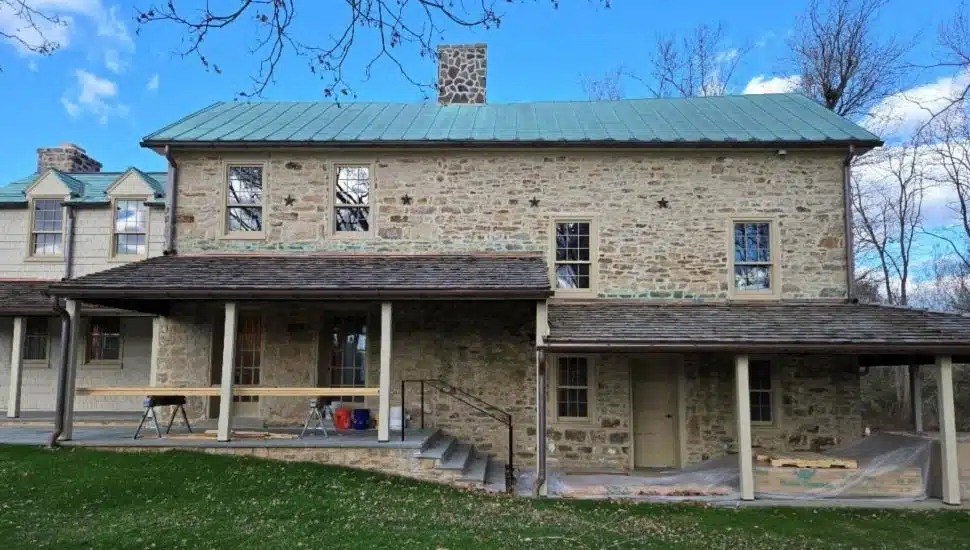
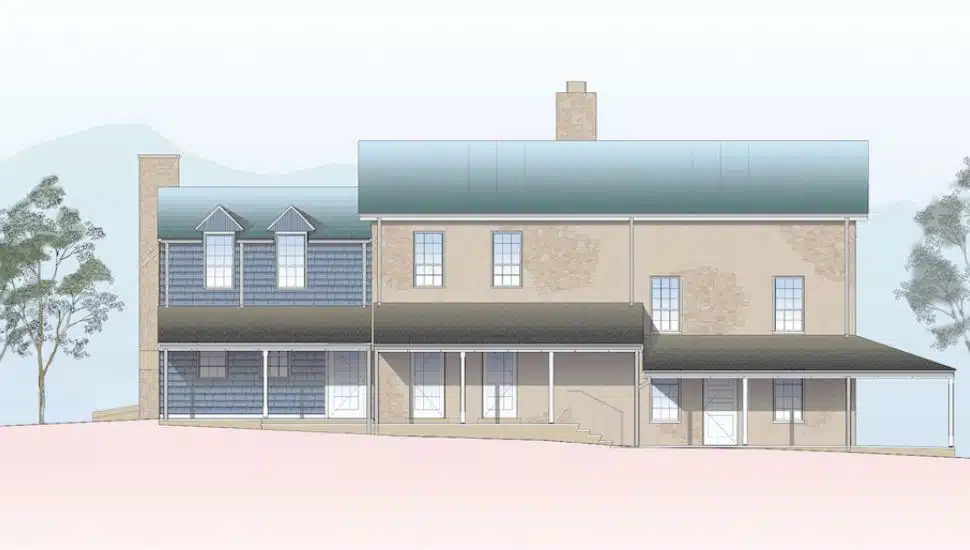
The building itself is part of the story. The restored 18th-century stone farmhouse at 867 Newtown-Langhorne Road dates to 1716 and carries its own chapter of African American history.
During the 1930s and 1940s, Boone Farm was a known destination for Black families arriving from Georgia, North Carolina, and South Carolina during the Great Migration.
Many were headed to New York. They heard the farm was hiring, stopped in Bucks County, and never left.
The 4,000-square-foot structure now spans four floors and houses seven exhibit rooms, a research library, a gift shop, and additional interpretive spaces.
In 2020, Bucks County Commissioners voted to lease the 32-acre property to the museum for one dollar a year for 29 years. Groundbreaking followed in 2022.
That kind of public commitment, a county turning over a historic property for a dollar a year, made everything that followed possible.
What visitors will find inside goes well beyond national Black history. The Timeline Room traces more than 70 moments from the 1630s through the present, including figures most Bucks County residents have never heard of.
Cyrus Bustill, a Black man with deep county connections, baked bread for Washington‘s Continental Army. His name belongs in the same conversation as any Revolutionary War figure associated with this region.
The Passage to Freedom Room explores what Bucks County actually was to enslaved people seeking freedom.
AME churches and Quaker communities from Bristol to Quakertown served as active stops on the Underground Railroad. The room brings that network to life through murals, interpretive panels, and interactive technology.
A third room confronts what freedom looked like after it was won. It covers African American neighborhoods that no longer exist, the arc of the Great Migration, and the integration of Levittown.
In 1957, William and Daisy Myers became the first Black family to move into the planned community. What followed, weeks of harassment, protest, and national news coverage, is one of the most consequential civil rights episodes in Pennsylvania history.
It unfolded in Bucks County.
Other spaces display the names and ages of people enslaved in the county, drawn from census records of the late 1700s and early 1800s.
A two-story Wall of Fame spotlights African Americans with Bucks County roots.
A 7-foot bronze relief sculpture by artist Selma Burke anchors one space. A replica of Harriet Tubman‘s satchel, a compass, a lantern, and an antique pistol sit in another.
These are not abstract themes dressed up as exhibits. They are objects. You can stand in front of them.
Spencer saw the African American Museum of Bucks County clearly before it existed. Mitchell helped build it from scratch. Salley kept it alive long enough to become real.
When the doors open this summer, all three will be gone. But the history they spent their lives trying to share will finally have a home.
_____