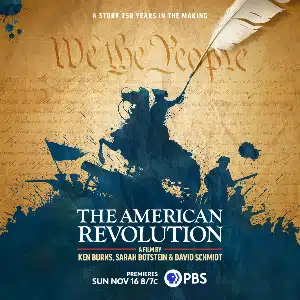
When we picture the American Revolution, names like George Washington or Benjamin Franklin often dominate the narrative.
But the fight for independence depended on global talent foreign-born immigrants-turned-volunteers who crossed oceans and joined a cause that was not yet theirs.
According to Claire Barrett of HistoryNet, seven such men played pivotal roles in shaping strategy, organizing forces, and securing the victory we now celebrate.
Baron von Steuben — The Architect of an Army
When the Continental Army arrived at Valley Forge in 1778, morale was low and discipline almost nonexistent.
Enter Baron von Steuben, a former Prussian officer who introduced unified drills, standardized training, and a clear chain of command.
He authored Regulations for the Order and Discipline of the Troops of the United States, effectively giving the fledgling army the shape it needed.
Without his efforts, the “rag-tag militia” might never have evolved into a force capable of standing toe-to-toe with the British.
Casimir Pułaski — Father of the American Cavalry
Polish nobleman Casimir Pułaski arrived in 1777 despite not speaking English, a bold move made possible by Benjamin Franklin’s sponsorship.
He became brigadier general of the Continental cavalry and formed the “Pulaski Legion.”
During the Siege of Savannah in 1779, he was mortally wounded while leading a cavalry charge.
His legacy: a mobile cavalry force that brought versatility and speed to the Continental Army.
Michael Kováts de Fabricy — The Unsung Horseman
Often overshadowed by Pułaski, Hungarian cavalry officer Michael Kováts trained mounted troops within the Pulaski Legion starting in 1778.
He forged one of the first hussar-style units in American service and was mortally wounded defending Charleston in 1779.
His contribution reinforces the idea that behind every well-known hero, there are skilled experts doing vital work.
Tadeusz Kościuszko — Washington’s Engineer
Polish engineer Tadeusz Kościuszko brought strategic fortifications and tactical innovation to the Continental cause.
He designed defensive works that slowed British advances, notably at Bemis Heights and later at West Point, where his fortifications deterred a direct assault.
His work exemplifies how specialized expertise, engineering in this case, can shift the balance of a conflict.
Johann de Kalb — A Leader in the South
German-born French officer Johann de Kalb entered the Continental Army as a major general, served through the harsh winter at Valley Forge, and led Maryland and Delaware troops in the Southern campaign.
At the Battle of Camden in August 1780, he refused to retreat, sustained 11 wounds, and died days later.
His courage under fire provided a beacon of leadership during one of the war’s darkest chapters.
Bernardo de Gálvez — The Logistics and Allied Force
As governor of Spanish Louisiana, Bernardo de Gálvez did not serve in the Continental Army, yet his role was critical.
He smuggled gunpowder, muskets, uniforms and medicine through the British blockade to American troops via the Mississippi and Ohio Rivers.
Later he captured key British ports in the Gulf region, denying Britain southern strongholds and keeping crucial supply lines open. His work underscores how victory depends on allies and logistics, not just battlefield heroics.
Marquis de Lafayette — The French Connection
At age 19, French aristocrat Marquis de Lafayette volunteered for the American cause without pay, paid his own expenses, and earned the trust of Washington.
He contributed in battle, but perhaps more importantly, he helped rally French military and naval support — an element that became decisive at Yorktown in 1781.
Lafayette’s story reminds us that network, influence and partnership can change the trajectory of a conflict — or a campaign.
Bringing It All Together
The success of the American Revolution owed a great deal to these seven foreign-born contributors who brought discipline (von Steuben), cavalry expertise (Pułaski, Kováts), engineering (Kościuszko), leadership (de Kalb), logistics and allied support (de Gálvez), and international diplomacy (Lafayette).
Together, their contributions formed a tapestry of skills, cultures, and convictions that helped turn 13 scattered colonies into a united people with a shared future.
They remind us that America’s story, from the very beginning, has always been strengthened by newcomers who step in, stand up, and give their best for the community they choose to call home.
For anyone building teams, organizations, or movements today, the lesson echoes across the centuries: lasting success comes from welcoming fresh voices, forming meaningful alliances, and sharing the load with people whose strengths complement your own.
Whether you’re shaping messages, leading a company, or nurturing a community, progress happens when you open the door to new ideas and let diverse talents work together toward a common goal.
Leaving You With This
What often looks like a domestic story of independence was in fact a global effort aided by outsiders who believed in the promise of freedom and liberty.
These seven men show how combining talent, strategy, partnerships, and action can tip the balance in any struggle.
Their legacy invites us to ask: Who are the “outsiders” in our country?
How might we invite them in and let their distinct culture and skills help us win our current-day battle?
_____
Editor’s Note: This post first appeared on BUCKSCO Today in November 2025.