A new study by Avondale’s Stroud Water Research Center has revealed the significant impact of road salt on local waters, writes Susan Phillips for WHYY.
Completed this past October, Stroud’s recent study examined the salt content in over 1,200 locations, mostly local streams. Citizens and community partners conducted the research, which marked the fall first road salt study compared to the standard January study.
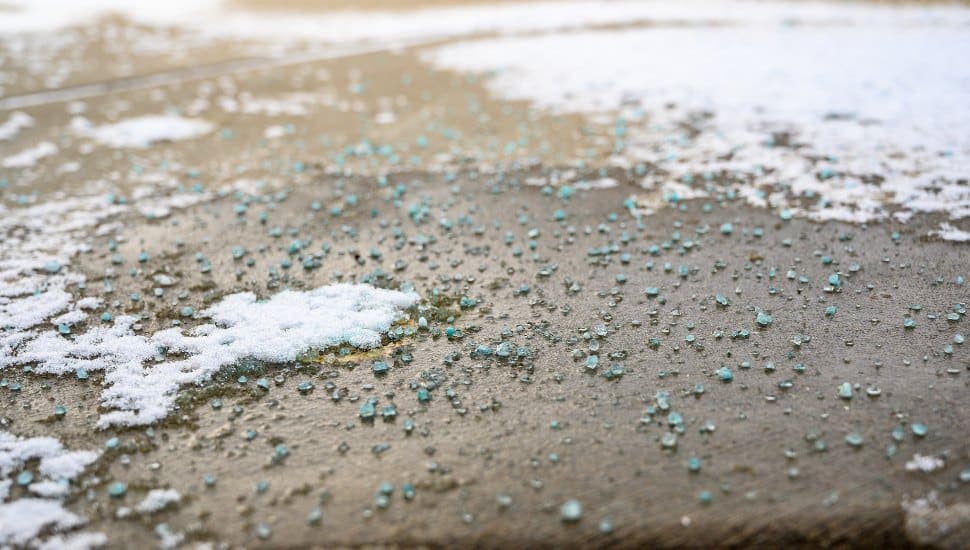
The research comes as annual winter storms lead to an increase in salt used to make roads safer for driving. However, road salt brings an underestimated negative environmental impact, as the salt soaks into the earth, seeps into groundwater, and later appears in local streams.
Dubbed the “Fall Salt Snapshot,” the research revealed that across 700 locations, 61 percent surpassed aquatic life thresholds set by the Environmental Protection Agency. 64 locations had levels over 230 milligrams per liter.
Stroud Water Research Center‘s winter snapshots reveal that some local waterways are twice as salty as seawater.
Such a high salt content diminishes the oxygen in local streams, disrupting local aquatic life, including insects that serve as food for local fish.
The annual amount of road salt used in the U.S. has tripled since 1975. Americans heavily rely on salt to drive safely.
However, researchers say there is a way to make road salt safer for the environment without removing it altogether.
Several states, including Maryland and New Hampshire, have introduced statewide programs that reduce the amount of salt used or replace it with a different brine. Area lawmakers in Pennsylvania are looking to adopt similar practices to coordinate with PennDOT on safer usage in the future.
Read more about Stroud Water Research Center and the organization’s recent road salt study in WHYY.
_____
Editor’s Note: This post was originally published on VISTA.Today in December 2025.