
The first thing you notice at the new Warrington Wellness Center is hard to photograph. It isn’t the water walls or the way afternoon light softens against pale wood. It’s the small bodily shift that arrives unannounced: shoulders loosen, breath slows, eyes stop scanning. “Some spaces hold you the moment you arrive,” Master Mingtong Gu writes. The space is built to hold you—gently, predictably.
I didn’t have language for that feeling until I began walking the Center with clinicians and the people who use it every day. Trauma-informed care, the scientific foundation the Center is built on, teaches us to look past behavior to the nervous system underneath. Polyvagal Theory gives words to what most of us register only as a hunch: the body runs a background safety check, and for people with highly active nervous systems that scan can operate on high alert. In the right spaces our social and learning systems slip into gear; when that scan detects even small warning cues, we white-knuckle our way through. This is where architecture can tilt the odds toward a more peaceful, productive day. The Center tries to do so quietly, steering clear of the cues that keep people braced—glare, clutter, crowding, unpredictable noise—and amplifying cues that say you belong here.
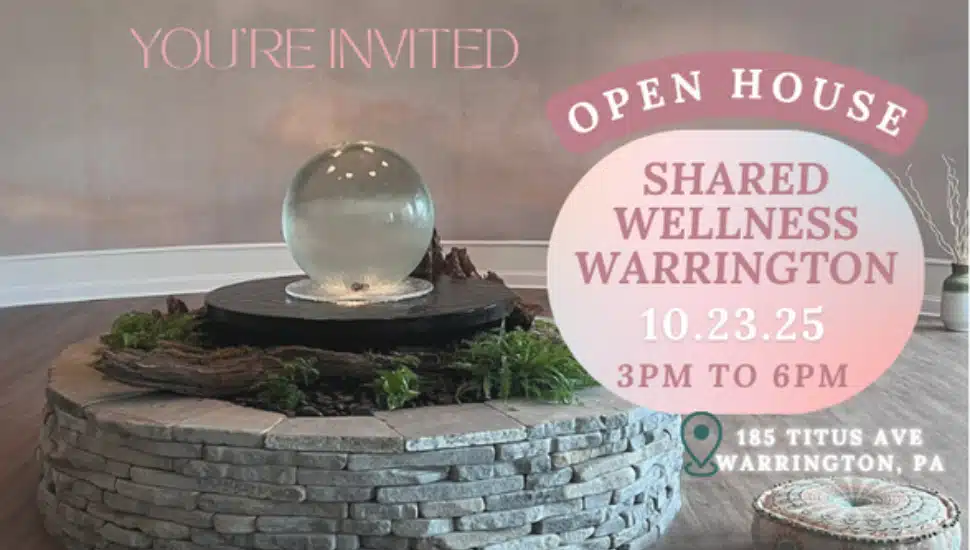
The idea sounds abstract until you enter this carefully curated space. Corridors open into rooms with purposes you can read without asking. Edges are softened; sightlines are clear enough to keep surprises to a minimum. The HVAC hum—so often the villain in sensory overwhelm—is nearly absent. Light is warm and dimmable rather than bright and bossy. A water globe in the lobby and glass “water windows” add motion at a human pace. There are nooks where a person can reset without disappearing, and tables where a group can gather without shouting over itself. As a clinician pointed out to me, the calm isn’t decorative; it’s physiological.
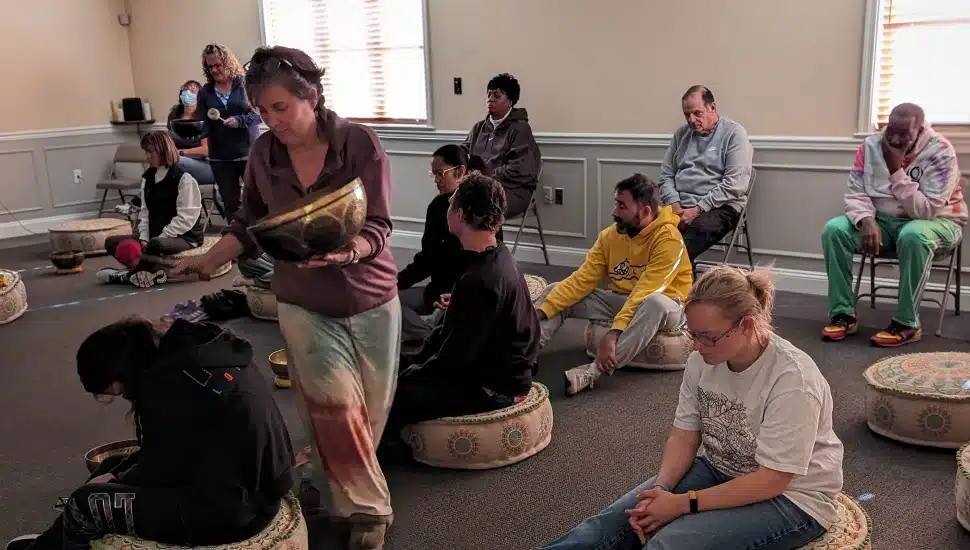
Choice, I learned, is not cosmetic; it’s restorative. In these rooms you witness small, frequent acts of agency: choosing a chair with arms or without, a swivel seat or a still one, a place by the window or on the wall. The textures change with the task—plush and yielding in retreat rooms; more structured in spaces where attention and posture are allies. Even smell—the most powerful of memory’s triggers—is handled with opt-in restraint. Aromas are diffused lightly, and the default is no scent at all.
None of this would matter if the space weren’t willing to change. “A trauma-informed building cannot be a finished object because the people inside it never are,” Clinical Director Riki Geyer explained as we moved from a quiet nook to a livelier common room. She went on: “Staff and participants offer steady feedback—this light is harsh by noon, that corner echoes on busy days, the beanbags help for ten minutes but not thirty—and the environment answers back.” Furniture moves. Rooms are tuned for light and sound. Sensory tools are introduced and rotated—weighted blankets, fidgets, a punching bag that helps certain bodies spend adrenaline safely, a massage chair that coaxes others out of a spiral. Adaptability isn’t a flourish here; it’s the ethic.
Can design measurably alter a program’s pulse? At Shared Wellness, which has been integrating these principles across its campuses since 2023, the early picture is encouraging. Since the changes, there have been 40 percent fewer behavioral-health crises—a category that covers community- and facility-based crisis responses, law-enforcement emergencies, and psychiatric hospitalizations, voluntary and involuntary. Seventy-two percent of participants have shown meaningful gains in heart-rate variability, a physiology metric that tracks the nervous system’s flexibility. Staff report less burnout and more satisfaction. Participants and employees alike use the same words more often—“safe,” “connected,” “peaceful,” and “beautiful.”
The research base is familiar to clinicians and increasingly to families: when the body finds a regulated “green-light state,” learning and relationships get traction. “My brother is participating—smiling—in activities I never imagined he’d try,” says Renee Guarro, whose sibling attends the day program. The Center operates on the belief that a room can shape a person’s state—or work against it.
This is why the design team sweats the unglamorous details—non-glare finishes, predictable wayfinding, places to retreat without being isolated, temperature and sound that can be set by the person using the space. Staying grounded and present is the goal. When the senses are pulled off-center—by a vent’s whine, a sharp scent—attention fractures and progress unravels. The building isn’t the therapist; it creates the conditions that allow healing, acting as a reliable co-regulator.
Martin and Thvedt—Shared Wellness’ founders—offered an invitation in their essay “The Importance of Place in Trauma-Informed Care”: treat the built environment as a member of the care team rather than a backdrop. Warrington takes that prompt seriously. The space is, without a doubt, beautiful; but what’s on offer here, Martin says, is not luxury—it’s infrastructure for resilience. The Center starts people at “yes, you belong.” From there, learning and autonomy—and even joy—have a place to land.
If you’d like to experience the Center’s impact firsthand—and help shape its future—join Shared Wellness for a community open house on October 23, from 3–6 p.m. Step inside, share your perspective, and be part of the evolution. Register your interest at SharedWellness.org.