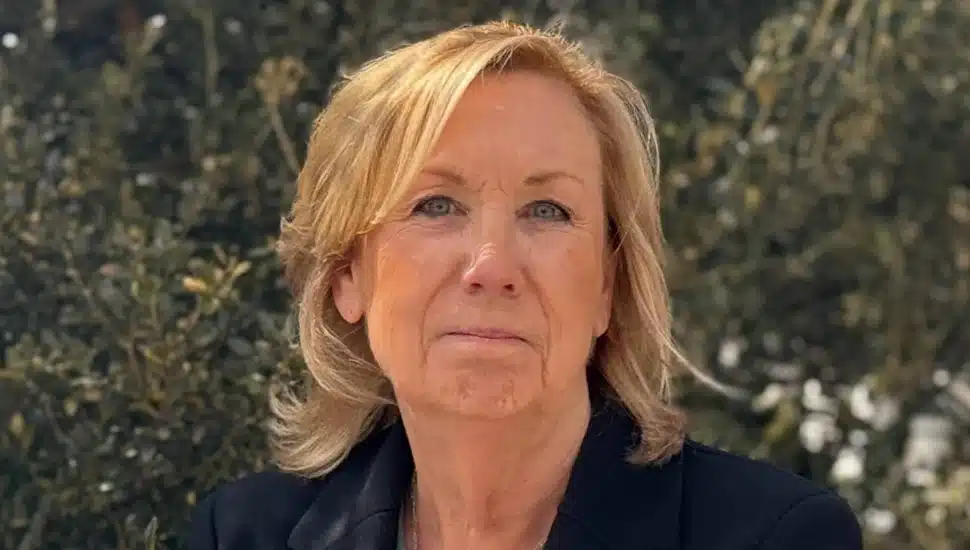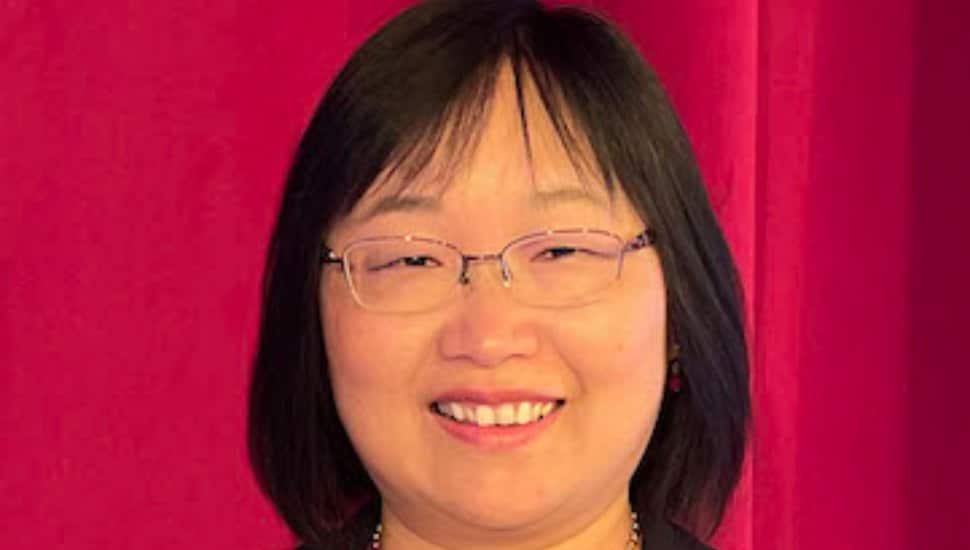
Jane Tang, Dean and Professor at Gwynedd Mercy University (GMercyU), spoke with BUCKSCO Today about studying nursing from a young age, discovering her Christian faith, and moving from Taiwan to the U.S. to further her education.
She’s dedicated to making sure Nursing is taught by people who have a passion for it, not those who are running away from it to take refuge in academia.
As Dean, she has sharply improved the pass rate of GMercyU’s nursing licensure exam (the NCLEX-RN), which all nursing graduates need to pass to become registered nurses (RNs).
Now, she’s working to develop even more new programs to support up-and-coming nurses and combat the nursing shortage throughout the healthcare system.
Where were you born, and where did you grow up?
I grew up in a small town in Taiwan. My father served in the military, so I lived with my grandparents until second or third grade before moving to the city of Tainan to be with my parents and my younger sister.
Where were you in the pecking order?
I am the middle one. I have a brother three years older and a sister two years younger.
What did your mom do?
My mom is a stay-at-home wife, but she picked up some jobs here and there to meet the family’s needs.
What memories do you have of growing up?
My grandparents owned a farm that grew tropical fruits, like oranges, mangoes, and lychees. So, I spent many afternoons packing fruit for deliveries. That hands-on experience taught me the value of discipline and family.
When I returned to be with my parents, one of my fondest memories is cooking together as a family. My father was an incredible cook. He would make homemade noodles, dumplings, and buns. It was through those moments that I developed a deep love of cooking.
I also remember how hard he worked. He picked up two, three other side jobs to provide for my family. Those early life experiences taught me the value of resilience, sacrifice, and gratitude.
Did you have any part-time jobs when you were growing up?
Yes, I picked up a lot of side jobs to help my family, but my first formal job was as an oncology nurse at a teaching hospital after graduating from a two-year nursing school in Taiwan.
When did you decide you wanted to be a Nurse?
A very young age. My mom had some health issues, and oftentimes, I would go to the hospital with her. And of course, I visited the doctor other times. I didn’t like needles, but through those moments I realized, it’s okay, because they help others. And I wanted to help people.
How did you distinguish yourself in high school?
I started Nursing in high school. I went to a four-year vocational Nursing school.
In our Asian culture, we go to school for education. Sports is a side job. Parents work hard to support their children in going to school and receiving the best education possible, because that will give us opportunities in life. The focus was studying, studying, and studying.
The focus here is different. It’s about preparing a holistic individual. I have three children, one just graduated from college, and another is starting this year. I really appreciate the education here.
What about music? What kind of music did you like?
I love different types of music, from classical and pop to jazz to gospel music.
Did you have a favorite artist?
Celine Dion was one of my favorites during college. I still enjoy listening to her today.
When I drive (it’s a long commute to work), I often listen to K-LOVE for uplifting gospel music, or I will play some instrumental hymns for peace and reflection.
Where did you end up going to college, and why there?
I love Nursing so much. So, after years of training as an Oncology Nurse, I decided to come to the United States to pursue my advanced nursing education so that I could share my passion with others.
I was the first in my family to attend college and the first to study abroad. No one was able to help me, so I did that all independently.
A friend gave me a booklet of faith-based Nursing schools in the Midwest of the United States, and Midland Lutheran College in Nebraska, which is now called Midland University, caught my attention. There was a nearby Chinese restaurant owned by someone from Taiwan. It felt like a sign of warmth and comfort, so I went and never looked back.
Although that school was small, it provided a nurturing environment for international students, especially. I was matched with a host family, and they embraced me as one of their own. I cherish that relationship and thank God for that experience.
You were very ambitious. Where does that ambition come from?
From my love of education. I had a very bad experience in my two-year college, where one of the Nursing faculty members was burning out. She did not like clinical nursing, so she went to academia to teach. She didn’t treat the students right.
God turned that bad experience into a great motivation for me. I didn’t want to become that kind of teacher. I wanted to become a supportive nursing faculty member because I love nursing, not because I am running away from it.
That was the deepest motivation for me to come to this country. The United States has the most advanced medicine and nursing education. And I believe a good nursing faculty should have great role models, not just knowledge. That’s why I took the hard way and came to the United States.
Were your parents religious? Or did you come to faith on your own?
I came to the faith on my own in high school, when I went to the hospital for my clinical. I witnessed a Christian, the way she and her family lived, and I envied her and her family. I grew up in a Buddhist family. So, when I was in high school, I changed my religion and my relationship to Jesus.
After you finished at Midwest, who were the people who saw promise in you and opened doors for you?
God has blessed me with many champions throughout my journey. My goal was to become a nurse educator. So, after college, I went to the University of Iowa to pursue my master’s in Nursing Education and doctorate in Nursing Administration Services.
There, I was blessed to study under nationally recognized nursing researchers and leaders and to work on NIH-funded research teams. Those experiences resulted in many of my publications, which established the pathway for me to pursue my nursing career in higher education.
When I moved from Iowa to Pennsylvania to join my husband during his postdoctoral training, I interviewed at Immaculata University with the late Dr. Janice Cranmer and Dr. Marge Lacey for my first faculty position. They not only hired me but entrusted me with leading the graduate nursing program soon after that.
I also really appreciate Dr. Patty Knecht. She later supported my appointment as division of nursing chair, where I led the effort to improve our NCLEX-RN pass rate. It’s a type of licensure exam to become a registered nurse. That role opened many doors.
I applied for a dean’s position and was not selected, but that experience led to new opportunities. I went on to apply to other universities and, by God’s grace, received offers to serve as dean at different nursing schools. Ultimately, I chose GMercyU, and President Deanne D’Emilio believed in me. I’m especially grateful to her.
What do you think President D’Emilio saw in you?
I’ve had a solid leadership role for years, from first-level assistant professor to associate professor to full professor with tenure. I have deep experience in diverse nursing programs, from the traditional pre-licensure BSN program to the second-degree BSN program to the master’s program to the doctoral program. I have experience developing many new programs.
Most importantly, GMercyU was focused on improving its NCLEX-RN first-time pass rate. She saw I had solid experience leading another nursing school to a very successful outcome. I believe that’s one of the reasons she believed in me.
Have you been able to improve GMercyU’s pass rate?
God did not waste any of my pain or the lessons that I learned. By God’s grace, I was able to work with my Nursing team here, and my faculty members were so dedicated. It’s through that teamwork and the administrators’ support that we were able to increase the scores. We’ve been staying in the 90s, including GMercyU’s highest NCLEX first-time pass rate in program history last year. So, great team effort.
We’re halfway through 2025. What priorities and opportunities are you focused on?
Higher education is facing major challenges now, especially with the decline in enrollment and financial pressures.
At GMercyU, we have more than 60 years of strong experience training nurses and healthcare providers. With generous support from the Maguire Foundation and other donors, we are building the Frances M. Maguire ’55 Healthcare Innovation Center. It’s set to open this fall.
This HIC will serve as an interprofessional hub, bringing together multiple healthcare professions, like Nursing, Respiratory Care, Occupational Therapy, Speech-Language Pathology, Radiation Therapy, and Exercise Science. It is designed to foster innovation, collaboration, and excellence in clinical training.
This is a once-in-a-generation opportunity to transform how we prepare healthcare providers and address the workforce shortage. We have a severe Nursing shortage, so I’m truly honored to lead this dedicated and committed team.
We still have to pack up and move to the new building this summer. It’s a busy time, a challenging time, but an exciting time.
I’m also focused on developing new programs. We’re partnering with other institutions and developing three-year Nursing programs to help prepare more nurses. We’re bringing back RN to BSN programs. We recently approved a new MSN program with a focus on nursing education, as well as the Ed.D. program in higher education teaching and learning with a Nursing Education concentration.
It’s all with the intention of preparing more qualified Nursing educators, who can prepare Nursing leaders and clinicians to contribute to community and global health. Because we also have a severe shortage of Nursing educators to train the next generation of Nurses.
What do you do in all your spare time?
I don’t have much spare time. When I am not working or serving in church, I enjoy listening to music, reading, cooking, and hiking. These things bring me joy and keep me more focused. I wish I could have more time to cook, but I usually take the opportunity during the weekend. I thank God I have a wonderful and supportive husband.
Three last questions for you. What’s something big that you’ve changed your mind about over the last 20 years?
My Christian faith is very important to me, and I grew up in a Chinese family, where my parents taught me the value of a work ethic. I always believed that if I pushed hard, I’m going to be okay. I’m going to perform well. However, I’ve learned resilience isn’t about enduring. It is about recharging.
Recently, I was blessed again to be selected for the leadership development program for new deans with the American Association of Colleges of Nursing. There, I learned the importance of burning bright, instead of burning out.
I learned that I have to provide intentional self-care. So, now I build in short moments of renewal throughout the day to stay present, energized, and positive. To have peak performance, I had to learn the importance of rest.
As a Dean, this job is demanding. All day long, I am faced with another meeting, another issue, one after another. There’s no way you can find a long period of time to take a break.
So, it’s important to create space intentionally. I learned through that program about something called “time confetti,” meaning you pick up five minutes here, 10 minutes there, so you have that moment of a break.
It’s a crazy world out there. What keeps you hopeful and optimistic?
My faith. There’s a piece of advice I received when I had just started the nursing education position. I was anxious, and a church member encouraged me and gave me this Bible verse from Colossians 3:23-24. It says, “Whatever you do, work at it with all your heart as working for the Lord, not for human masters.”
I see my work as a calling, and that excellence, integrity, and faithfulness matter even when no one is watching.
That verse continues to ground me in my purpose and bring me hope. My job is very demanding, but because of my faith, I know that I’m using my gift to make a difference, and that’s all I need to focus on. Leave the rest to God.
Last question for you, Jane, and you alluded to it already. What’s the best advice you’ve ever received?
A lot of women suffer from this, and not just women. I was surprised to find that a lot of men suffer from this too. It’s called impostor syndrome.
It is my calling to become a Nurse, to become a Nurse Educator, to make a difference, and to honor my God. And, unfortunately, I have encountered a lot of barriers, so I have self-doubt. But what I have learned is that, even when I’m not sure if I can do something, I can turn to God and ask for His help.
The Bible verse that brought me to the United States was from Joshua 1:9. It says, “Do not be discouraged, do not be dismayed, and be strong and be courageous for I am with you wherever you are and wherever you go.”
When I took on this position as a Dean, I prayed so much, because I wasn’t sure. But I said yes to God and to President D’Emilio, because of a Bible verse from Exodus.
It tells me, “I will go with you, and I will give you rest.” So, when I got that assurance, I knew, “Lord, I will go. But You are going to take control. You are going to help me.”
I have someone from my church who reminds me again and again and again, “Jane, do your very best. That’s what God asks of you. You need to turn to Him. When you pray and connect to your God, you will get strength.”
That advice supports me. It makes me feel like, even though I walk through the darkest valley, I will fear no evil. God is with me. And I know I can lean on Him and not take all the burdens onto my own shoulders.
Faith helped me address my impostor syndrome. I’m getting better and better.