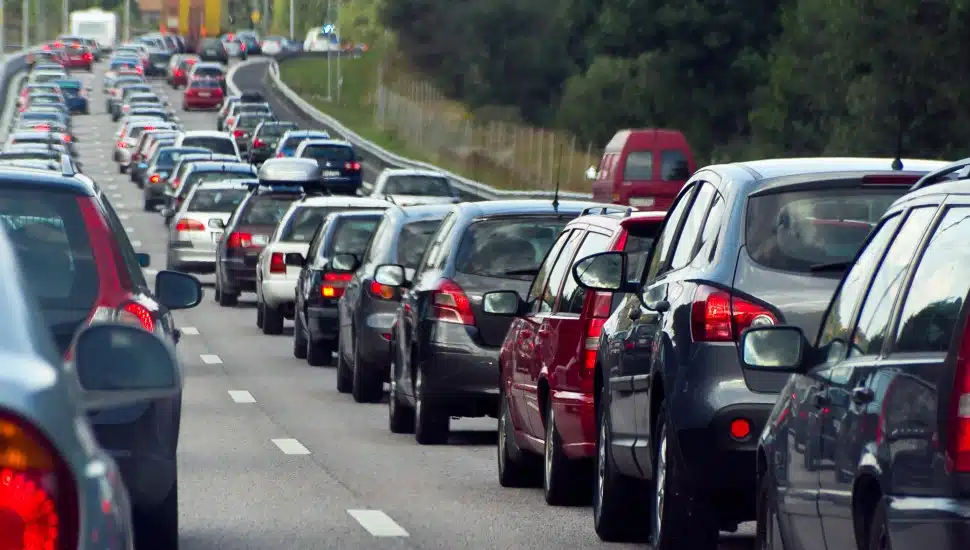
If SEPTA follows through with its proposed cuts to nearly half its transit service, around 275,000 more cars could flood the region’s interstates and highways daily, according to new traffic projections from Delaware Valley Regional Planning Commission, writes Thomas Fitzgerald for The Philadelphia Inquirer.
“Imagine if everyone from Pittsburgh decided to visit the region on the same day, and they all drove themselves here – even the children,” said Matt Gates, DVRPC’s associate director for travel trends and forecasts, during a meeting of the agency’s board of directors on Thursday. “That’s kind of what we’d be expecting.”
The population of Pittsburgh is approximately 300,000.
This could make commutes across the Philadelphia region significantly more painful for drivers. Average speeds would drop, some frequently used routes would take much longer, and vehicle miles traveled in Philadelphia and its four suburban counties would increase by 2 million per day. Around 55 percent of this added traffic spilled onto arterial, secondary, and neighborhood roads.
For example, a southbound commute from Academy Road to the Vine Street Expressway on I-95 could last 18 percent longer, with traffic slowing by 6.5 mph during peak hours. Meanwhile, Chester County’s U.S. 202 could see commute times rise by 40 percent.
To get the full picture of how these proposed SEPTA cuts could gridlock the region, check out the complete article in The Philadelphia Inquirer.