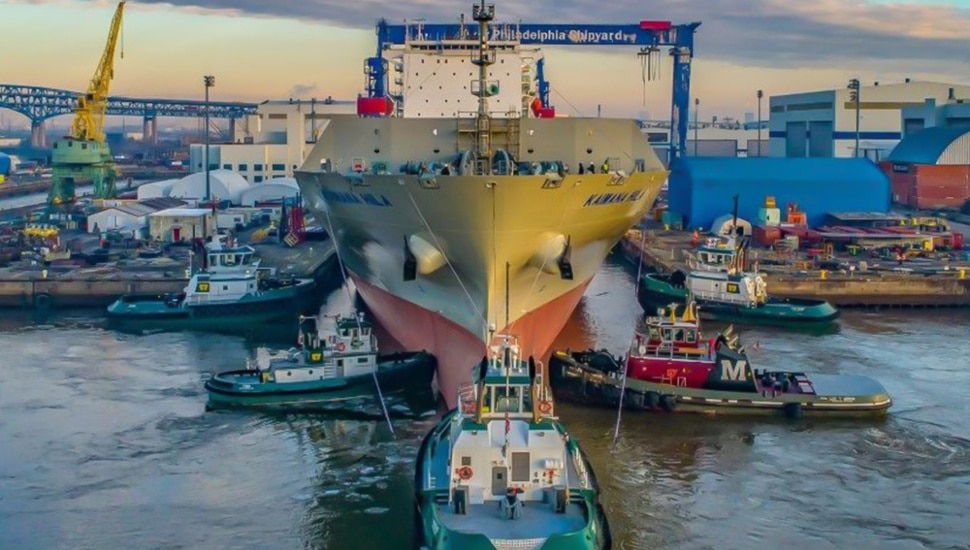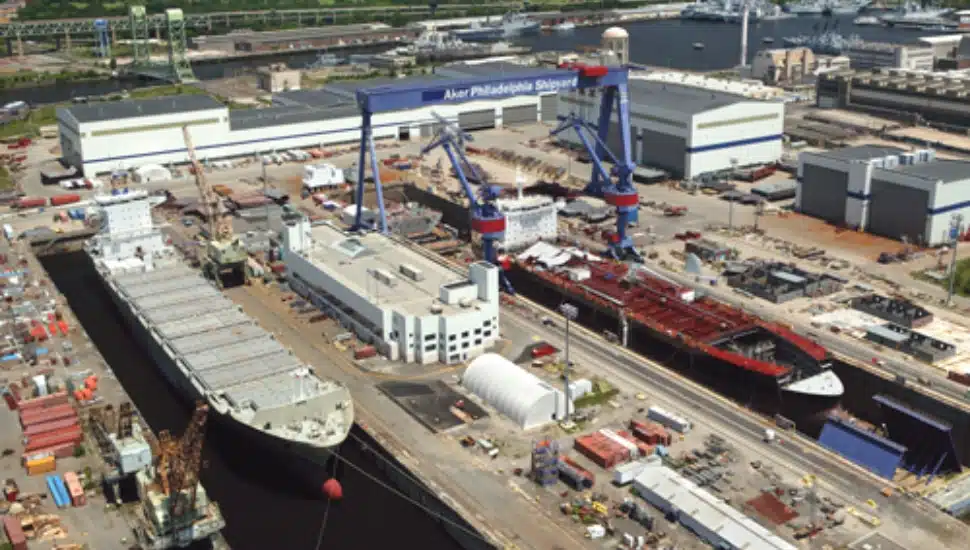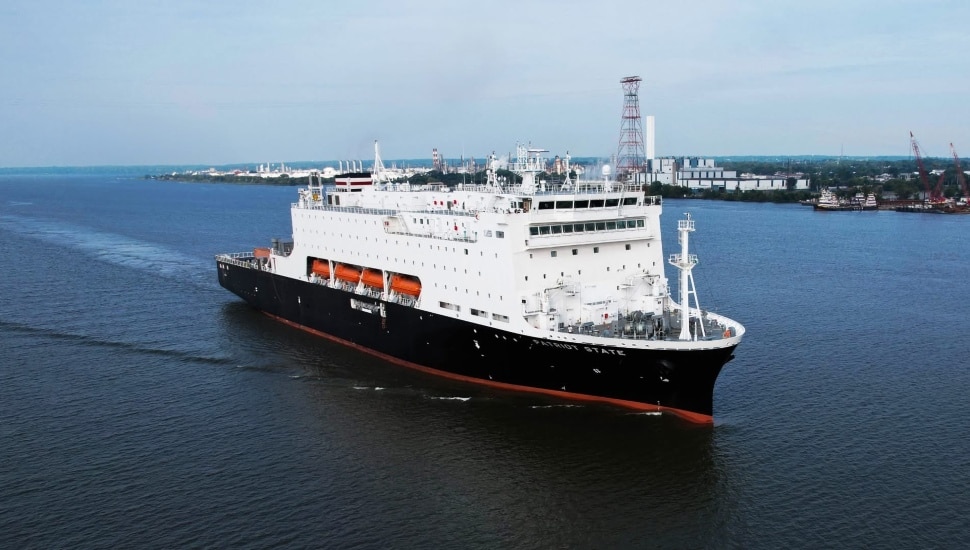
Philadelphia is one of only two U.S. shipyards still building commercial ships, as China now completely dominates the industry, write Inti Pacheco and Costas Paris for The Wall Street Journal.
The Trump administration has floated the idea of bringing shipbuilding back to the country by imposing port fees on Chinese-built ships and making it obligatory for some U.S. exports to be moved on U.S.-built ships. However, that idea faces challenges in both labor and profitability.
While American shipyards employed over one million people during World War II, that number started to drop in the 1980s and has over time reached less than 150,000.
Meanwhile, the costs of building ships domestically have skyrocketed.
This is evident in two recent orders from Hanwha, the conglomerate that bought Philly Shipyard last year and also operates shipyards in its home country, South Korea.
In September, Philly Shipyard began building three small boxships for Matson Navigation, each costing around $333 million — compared to just $55 million for a similar ship built at a Chinese yard.
Around the same time, Hanwha’s South Korean operations secured an order from Maersk for six much larger boxships, at an average cost of $200 million per ship.
Read more about shipbuilding and the Trump administration’s efforts to revive its production in The Wall Street Journal.
_____